
Birds
Birds observed, symbolic and decorative. 184 works, grouped by the museums' own subject tags and titles. Paintings first, then in date order.
184works
51average lightness (0–100)
16average colourfulness
200–1940dates
Combined colour mix
Gold & ochre 34% · Brown 18% · Grey 17% · Black 14% · White & cream 4%
Artists here: Ren Bonian (4), Paul Gauguin (4), Xu Gu (3), Francisco Goya (2), Jean-François Millet (2), Utagawa Hiroshige (2), Peter Paul Rubens (1), Shibata Zeshin (1), Gustave Courbet (1), Édouard Manet (1), Charles-François Daubigny (1), Yoshitoshi (1)
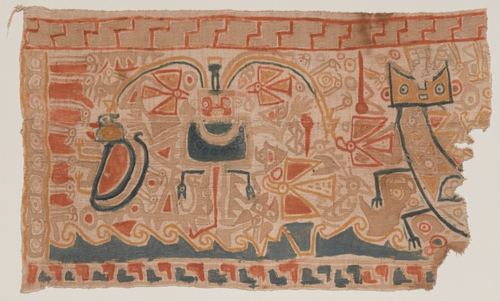 Painted Textile
Chancay, c. 1000
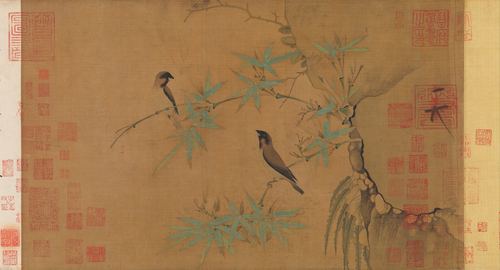 Finches and bamboo
Emperor Huizong of Song, early 12th century
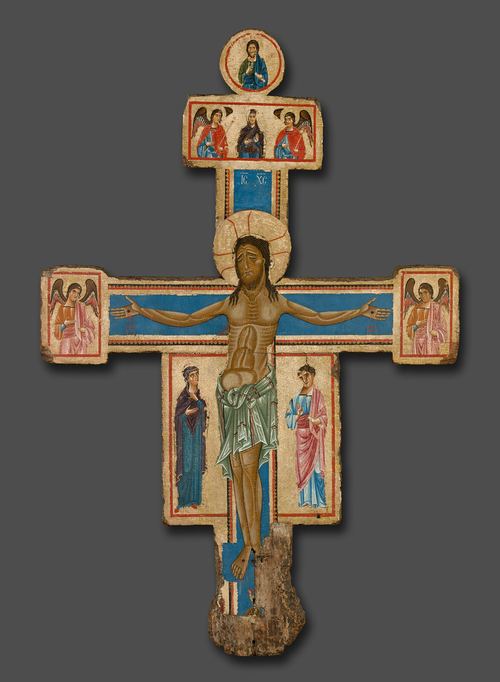 Crucifix
Master of the Bigallo Crucifix, c. 1240
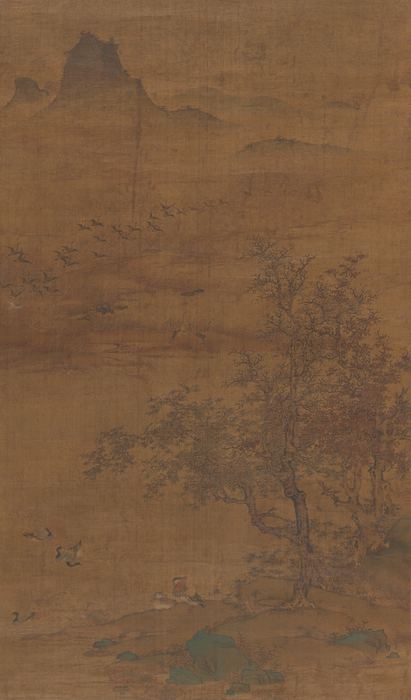 Flight of Geese
Unknown artist, Late Yuan (1279–1368) or early Ming dynasty (1368-1644)
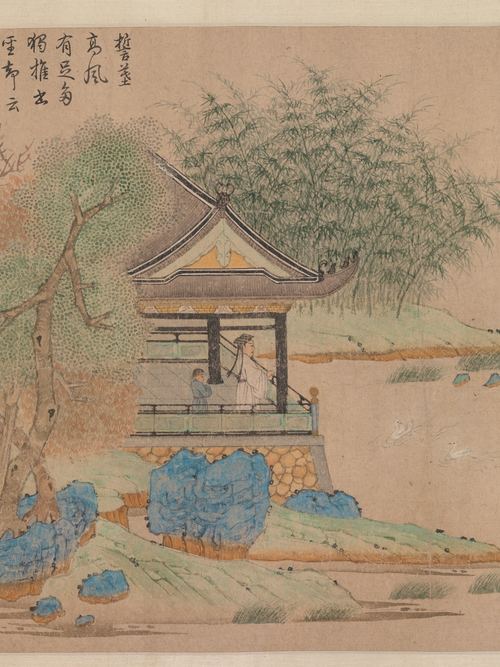 Wang Xizhi watching geese
Qian Xuan, ca. 1295
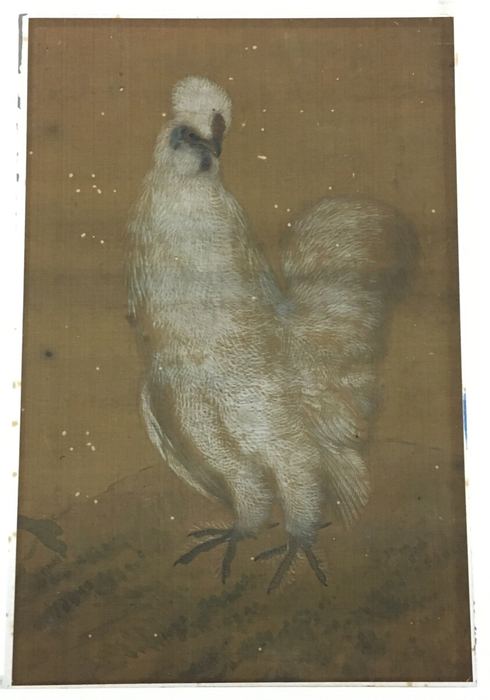 White Rooster
Unknown artist, Ming dynasty (1368–1644)
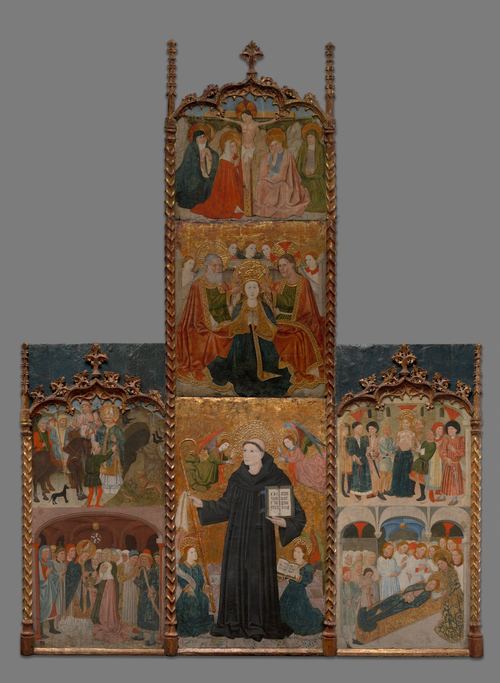 Retable of Saints Athanasius, Blaise, and Agatha
Master of Riglos, c. 1440–c. 1445
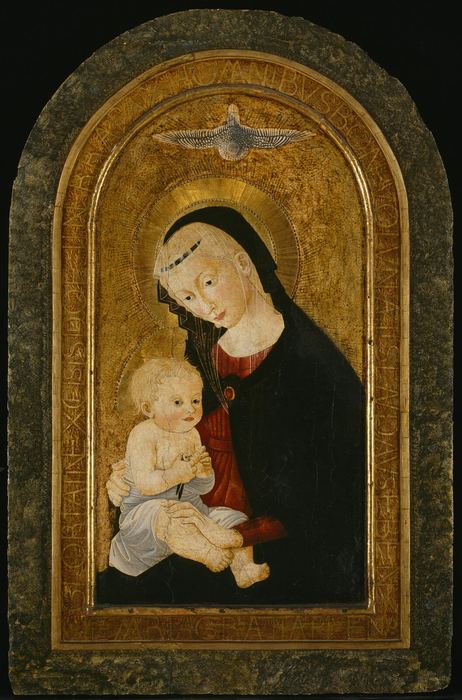 Virgin and Child
Lippi-Pesellino Imitator, c. 1465
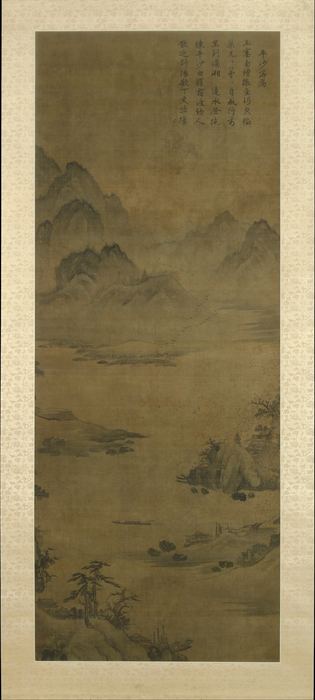 Wild geese descending to sandbar
Unidentified artist, late 15th–early 16th century
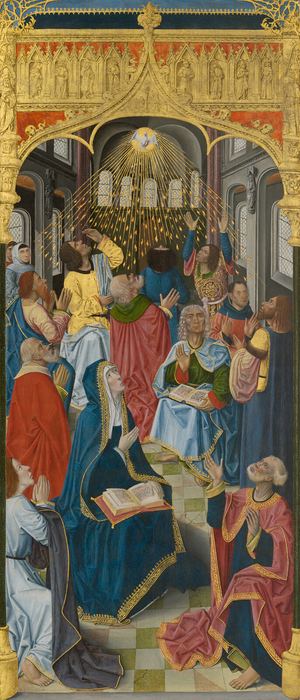 Panels from the High Altar of the Charterhouse of Saint-Honoré, Thuison-les-Abbeville: Pentecost
French, c. 1495
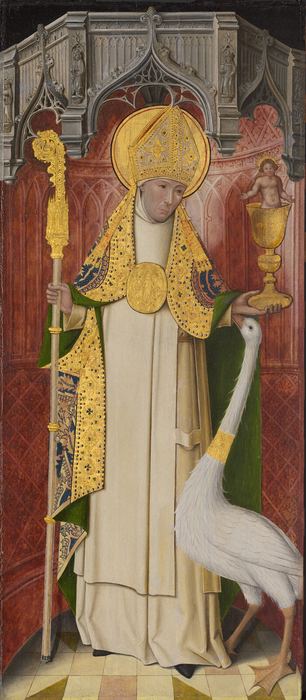 Panels from the High Altar of the Charterhouse of Saint-Honoré, Thuison-les-Abbeville: Saint Hugh of Lincoln
French, c. 1495
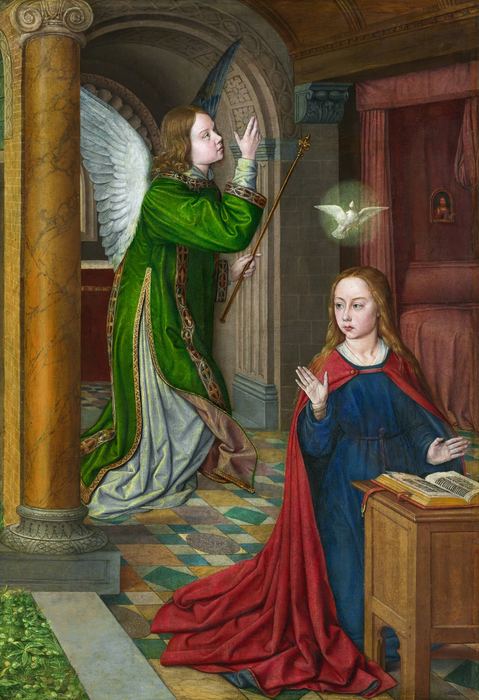 The Annunciation
Jean Hey, (the Master of Moulins), 1490–95
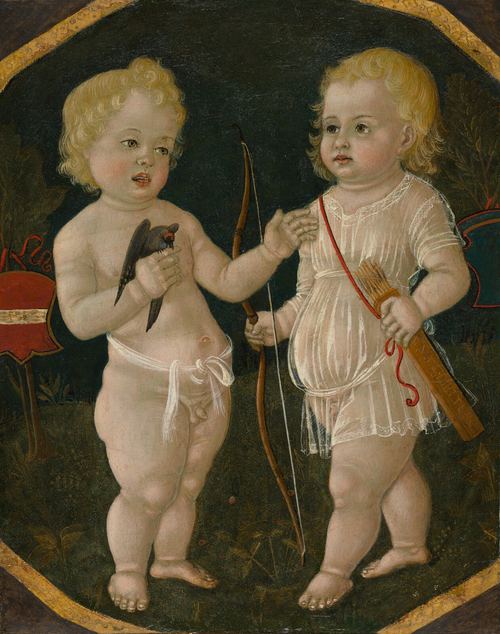 Two Putti
Matteo di Giovanni, 1490–1510
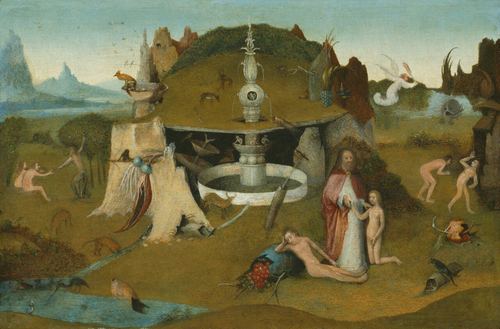 The Garden of Paradise
Workshop of Hieronymus Bosch, c. 1500–c. 1520
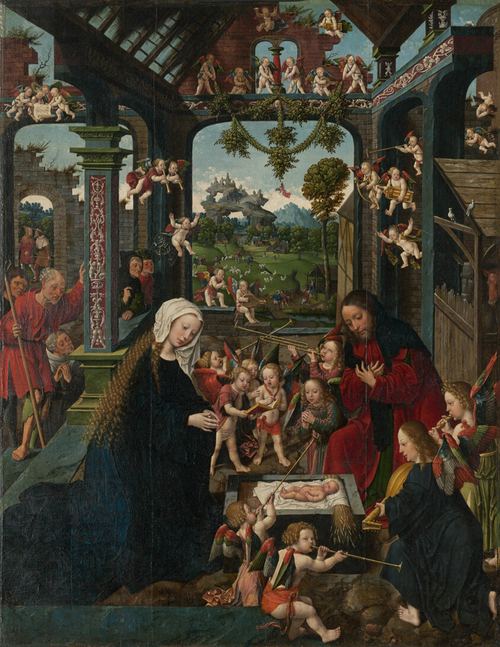 The Adoration of the Christ Child
Jacob Cornelisz. van Oostsanen, c. 1515
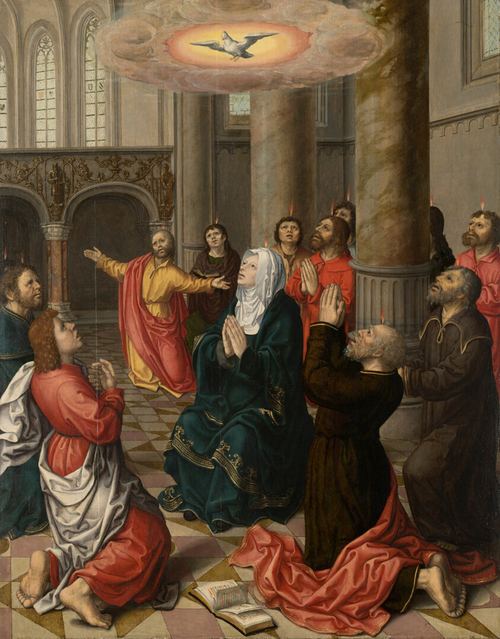 Pentecost
Workshop of Bernard van Orley, c. 1520
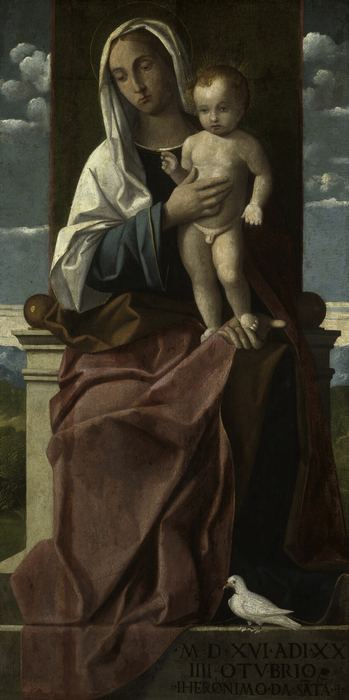 Virgin and Child Enthroned
Girolamo da Santacroce, 1516
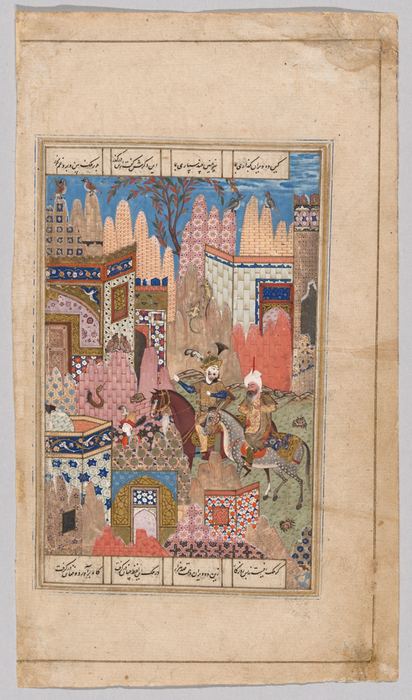 King Anushirwan and the Owls, from the Khamsa of Nizami
Islamic, Safavid dynasty (1501–1722), c.1535
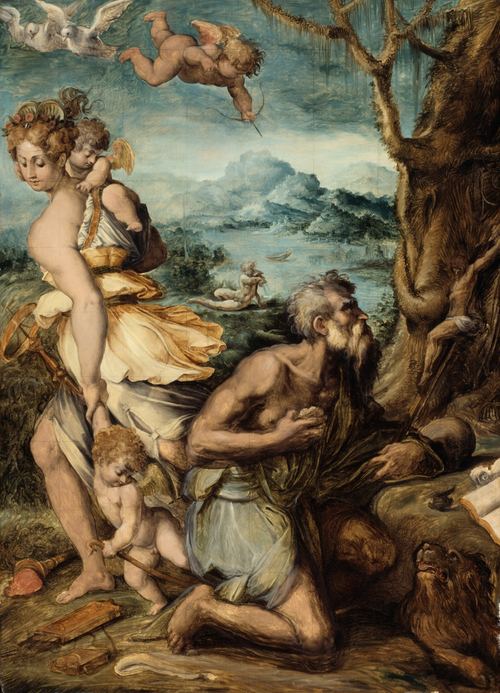 The Temptation of Saint Jerome
Giorgio Vasari, 1541–48
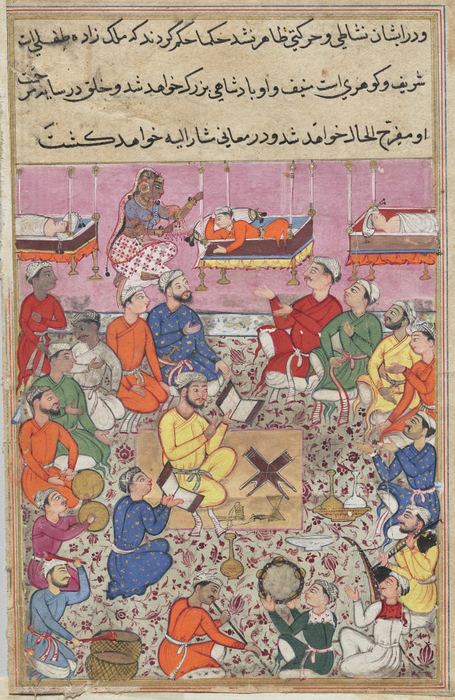 The infant son of the king of Isfahan responds to music, from a Tuti-nama (Tales of a Parrot): Thirteenth Night
Unknown artist, c. 1560
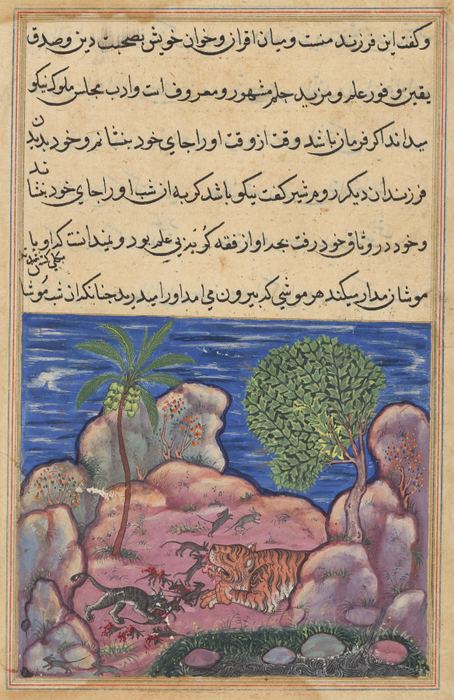 The cat attacks the mice which disturb the lion, from a Tuti-nama (Tales of a Parrot): Fifteenth Night
Unknown artist, c. 1560
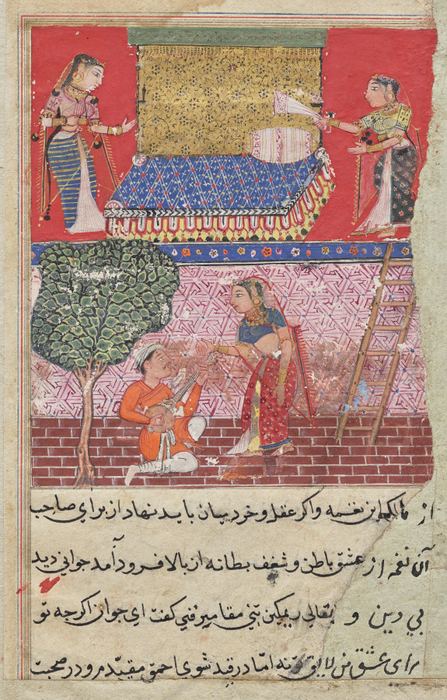 The daughter-in-law of the king of Banaras, charmed by the music of a vagabond, comes down to meet him, from a Tuti-nama (Tales of a Parrot): Sixteenth Night
Unknown artist, c. 1560
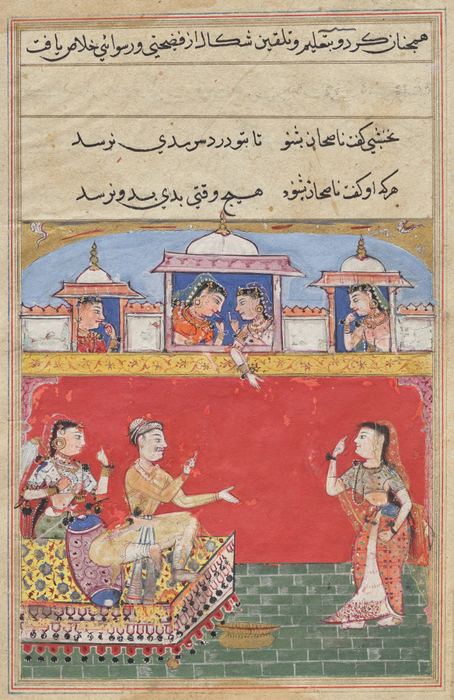 The daughter-in-law returns from her misadventure, feigning insanity, from a Tuti-nama (Tales of a Parrot): Sixteenth Night
Unknown artist, c. 1560
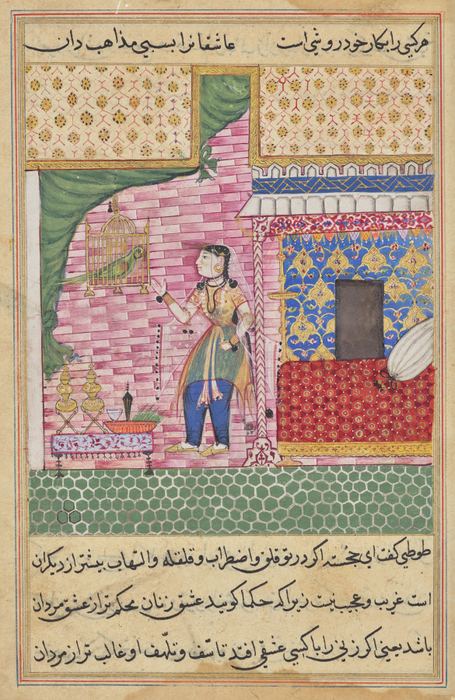 The Parrot Addresses Khujasta at the Beginning of the Seventeenth Night, from a Tuti-nama (Tales of a Parrot)
Sravana, c. 1560
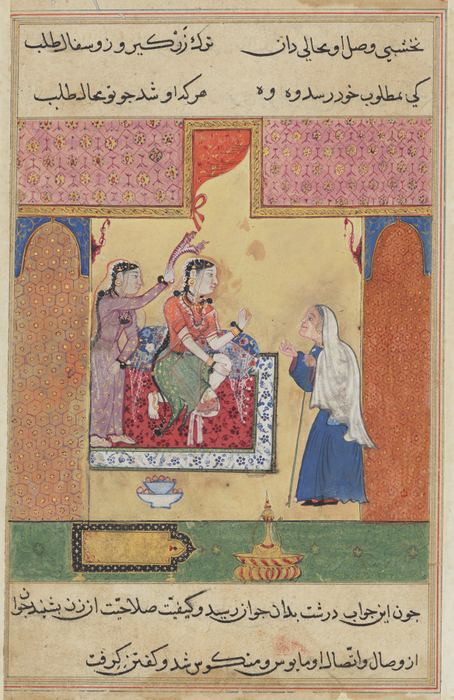 The old procuress conveys the young man’s message of love to Mansur’s wife, from a Tuti-nama (Tales of a Parrot: Seventeenth Night
Sravana, c. 1560
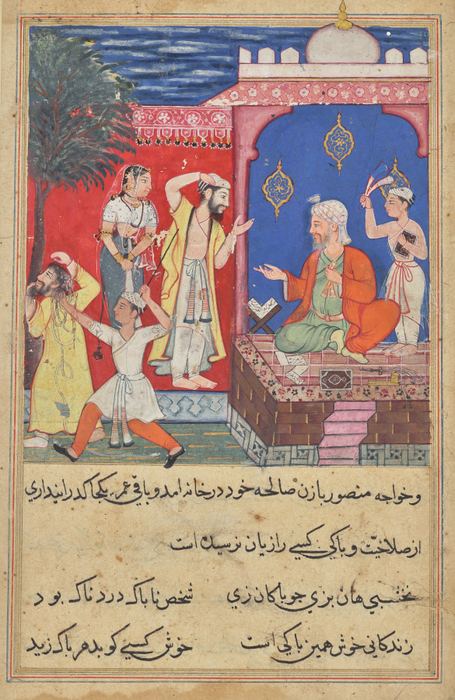 The false Mansur punished before the judge and expelled from the city, from a Tuti-nama (Tales of a Parrot): Seventeenth Night
Unknown artist, c. 1560
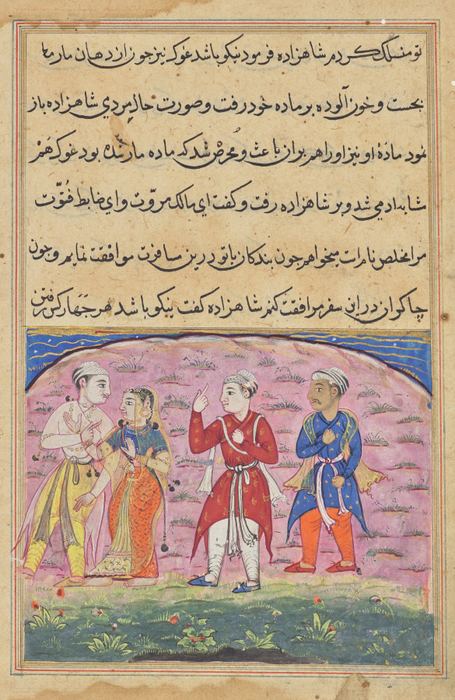 The prince and Nikfal are joined by Khalis and the Mukhlis who are the grateful snake and frog in human form, from a Tuti-nama (Tales of a Parrot): Eighteenth Night
Unknown artist, c. 1560
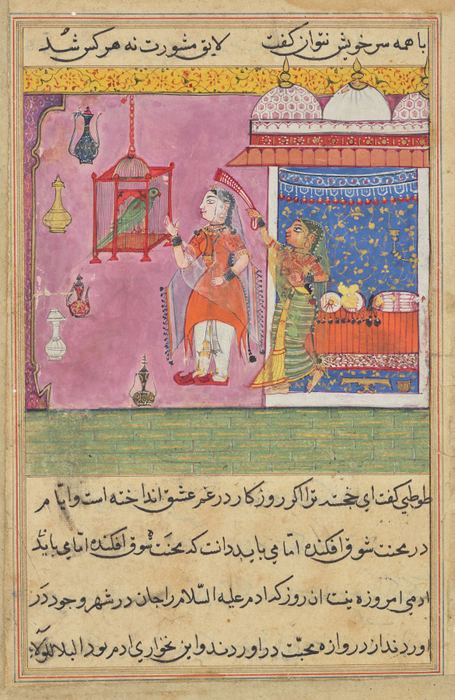 The Parrot Addresses Khujasta at the Beginning of the Nineteenth Night, from a Tuti-nama (Tales of a Parrot)
Unknown artist, c. 1560
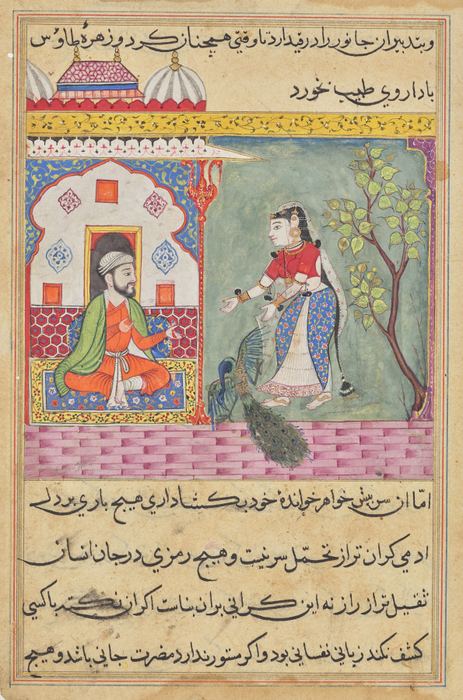 The Brahman’s wife who killed a peacock and ate its gallbladder on the physician’s advice, from a Tuti-nama (Tales of a Parrot): Nineteenth Night
Unknown artist, c. 1560
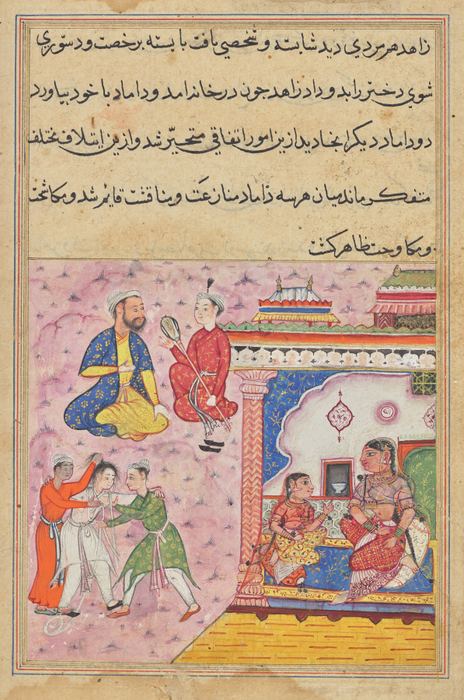 Three suitors fight amongst themselves for the hand of the devotee’s daughter, from a Tuti-nama (Tales of a Parrot): Twentieth Night
Unknown artist, c. 1560
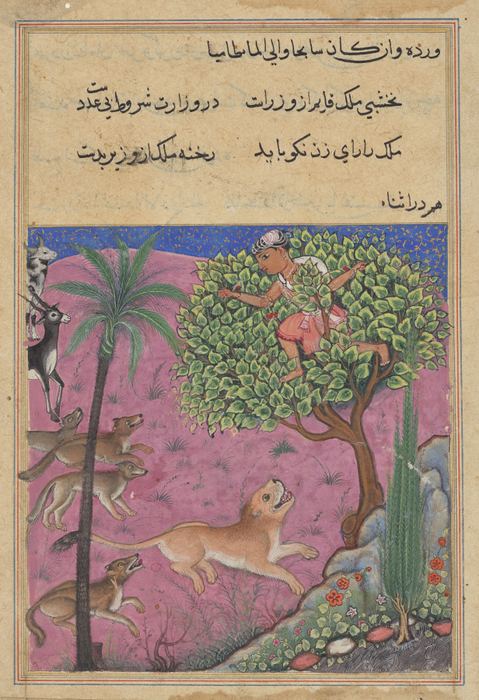 The wolf and the jackal, serving as viziers, instigate the lion who pursues the Brahman up a tree, from a Tuti-nama (Tales of a Parrot): Twenty-first Night
Unknown artist, c. 1560
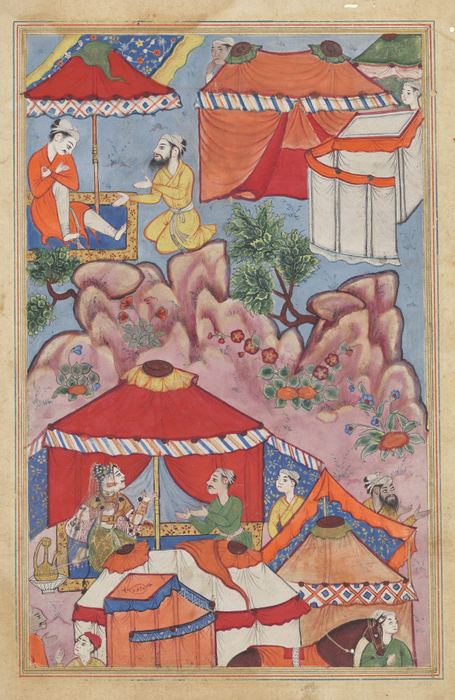 Bashir confides his love for Habbaza to an Arab friend, and sends him to her with a message, from a Tuti-nama (Tales of a Parrot): Twenty-fourth Night
Unknown artist, c. 1560
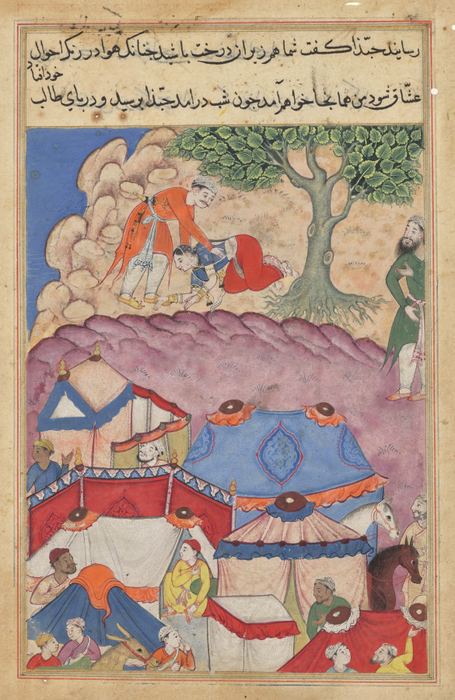 Habbaza meets Bashir under a tree, from a Tuti-nama (Tales of a Parrot): Twenty-fourth Night
Unknown artist, c. 1560
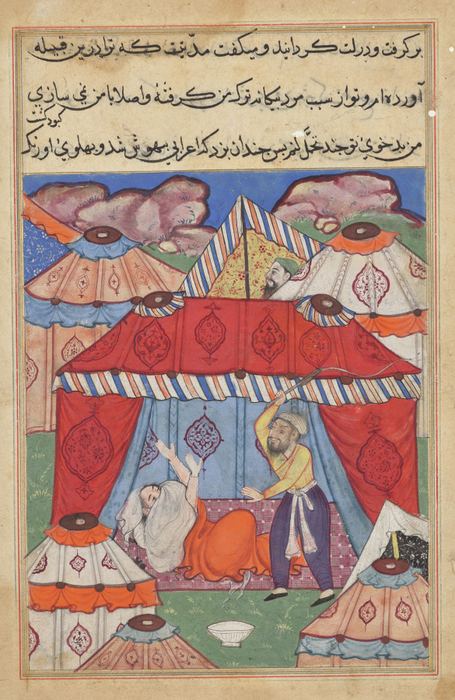 The disguised Arab, substituting for Habbaza, is whipped by her husband for refusing a bowl of milk, from a Tuti-nama (Tales of a Parrot): Twenty-fourth Night
Unknown artist, c. 1560
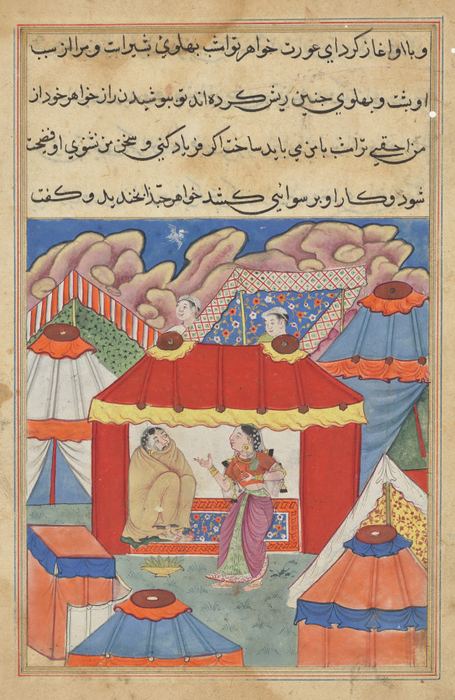 Habbaza’s sister, who is sent to console her, discovers the disguised Arab in her place, from a Tuti-nama (Tales of a Parrot): Twenty-fourth Night
Unknown artist, c. 1560
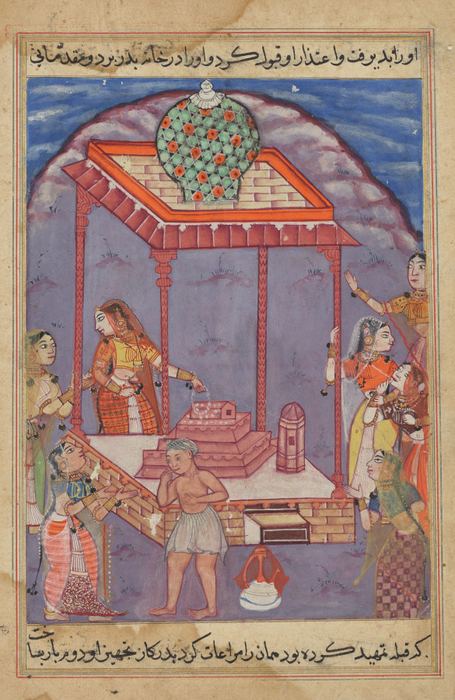 The destitute Mukhtar meets his wife Maimuna at a holy shrine, from a Tuti-nama (Tales of a Parrot): Twenty-fifth Night
Unknown artist, c. 1560
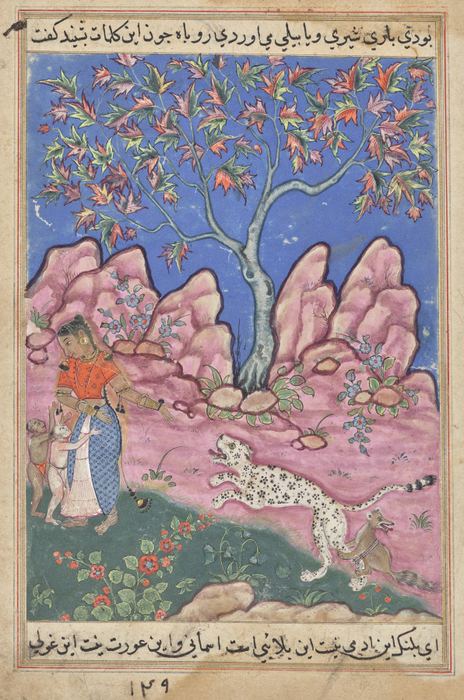 The woman conversing with her children, as the leopard returns, egged on by a fox who is tied to his leg, from a Tuti-nama (Tales of a Parrot): Thirtieth Night
Unknown artist, c. 1560
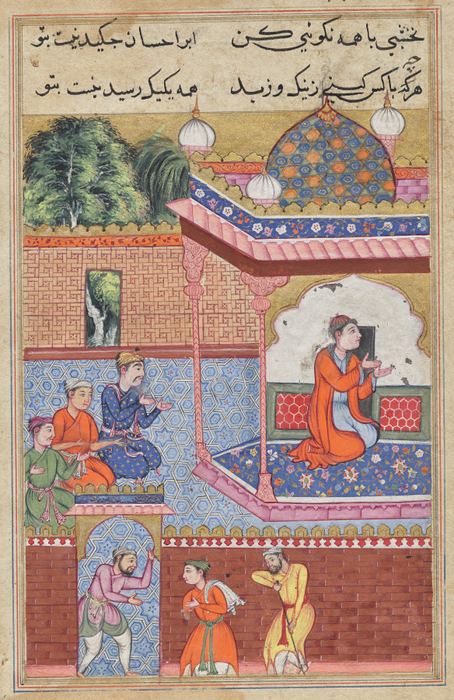 Kaiwan, Latif, and Sharif arrive at a house of worship, where they seek help from Khurshid who has become a mystical healer, from a Tuti-Nama (Tales of a Parrot): Thirty-second Night
Unknown artist, c. 1560
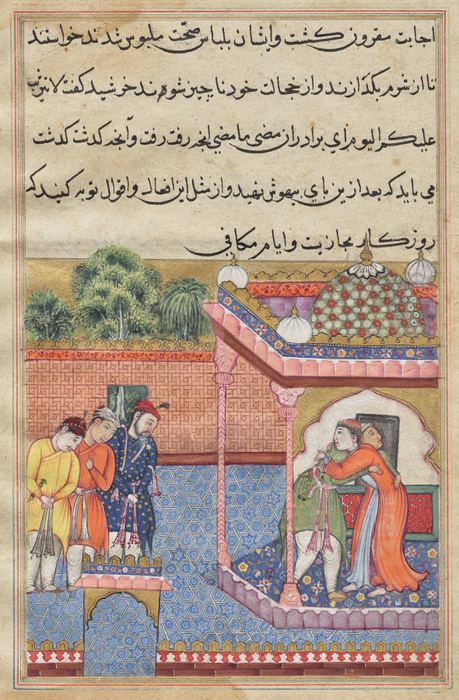 Khurshid reunited with her husband Utarid, from a Tuti-nama (Tales of a Parrot): Thirty-second Night
Unknown artist, c. 1560
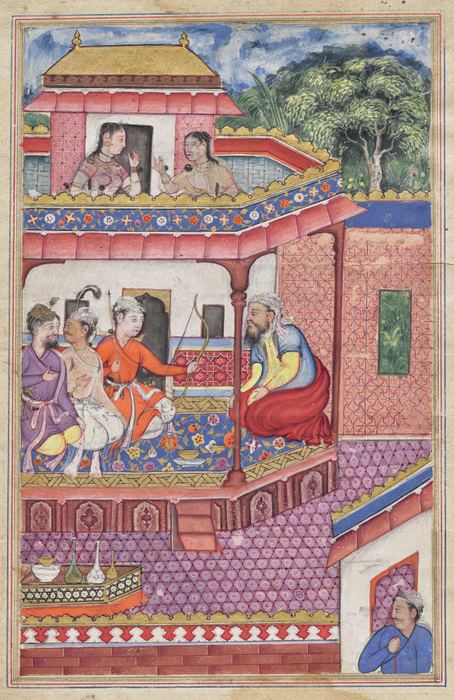 The three young men present themselves as suitors for the hand of Zuhra, the daughter of the merchant of Kabul, from a Tuti-nama (Tales of a Parrot): Thirty-fourth Night
Unknown artist, c. 1560
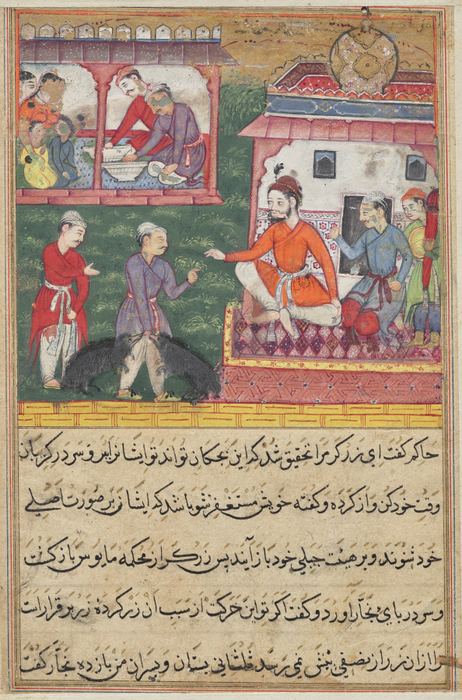 The goldsmith judged; the bear cubs trained by the carpenter as though they were his sons, from a Tuti-nama (Tales of a Parrot): Third Night
Unknown artist, c. 1560
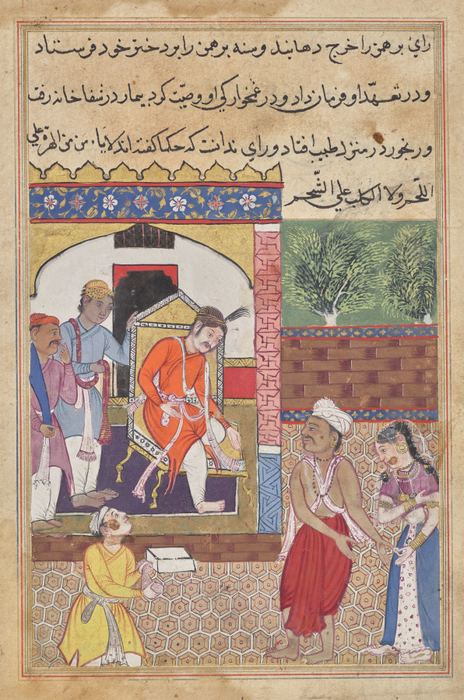 The magician, disguised as a Brahman, visits the king of Babylon, from a Tuti-nama (Tales of a Parrot): Thirty-fifth Night
Unknown artist, c. 1560
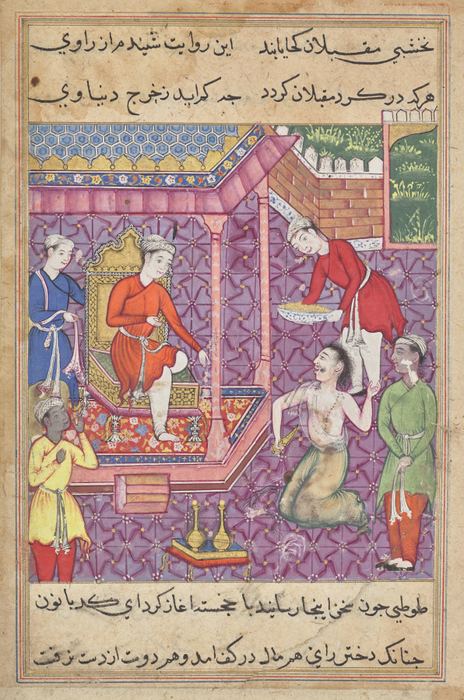 The magician disguised as a Brahman returns to claim his “daughter-in-law,” from a Tuti-nama (Tales of a Parrot): Thirty-fifth Night
Unknown artist, c. 1560
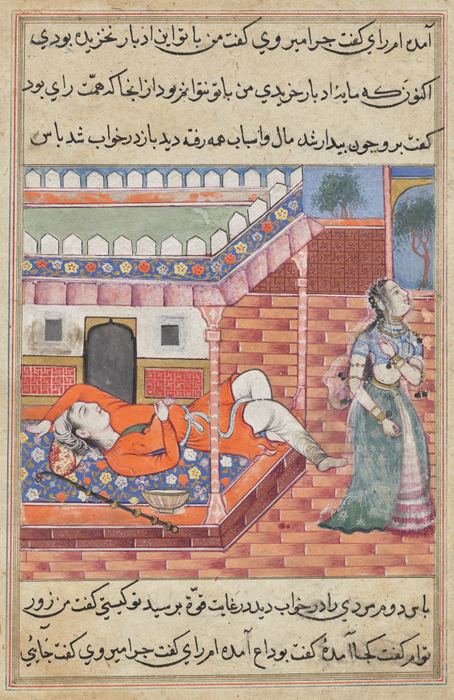 The king dreams of a lady, the personification of wealth, departing from him on account of his purchasing a bowl and a staff from a yogi, from a Tuti-nama (Tales of a Parrot): Thirty-sixth Night
Unknown artist, c. 1560
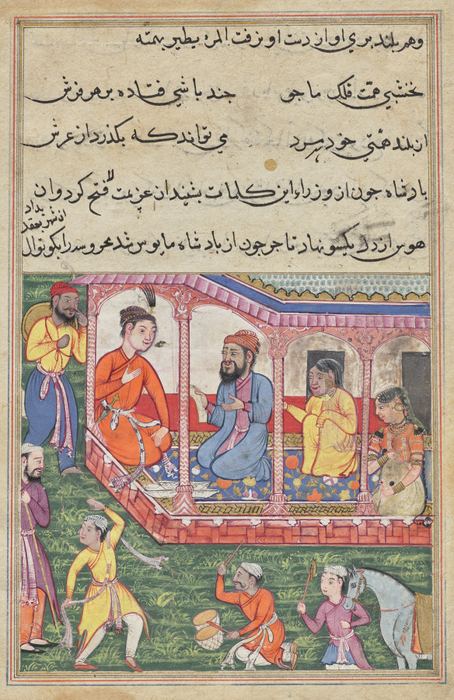 Mahrusa’s marriage to the prefect of the city, from a Tuti-nama (Tales of a Parrot): Thirty-sixth Night
Unknown artist, c. 1560
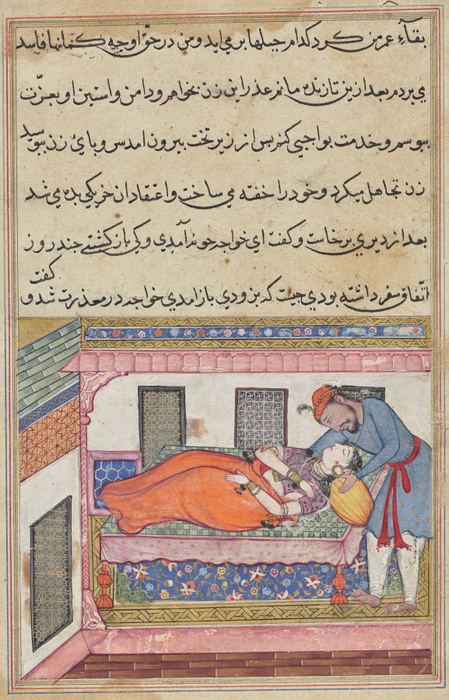 Shahr-Arai’s husband bends to kiss his wife who feigns sleep, from a Tuti-nama (Tales of a Parrot): Fortieth Night
Unknown artist, c. 1560
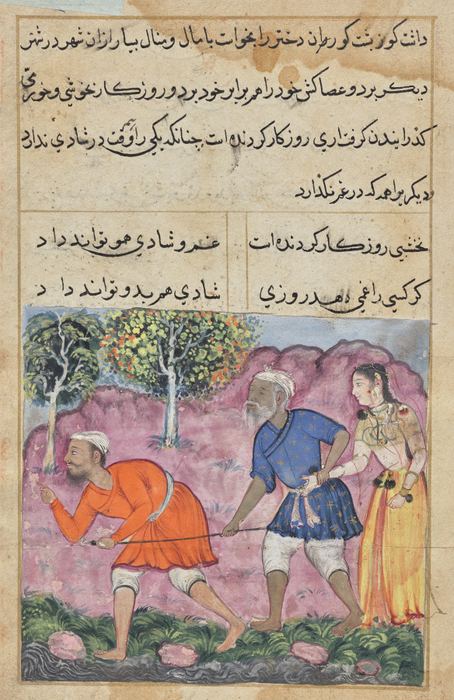 The Raja’s daughter, born with three breasts, accompanies her blind husband and his hunchback guide on a journey, from a Tuti-nama (Tales of a Parrot): Forty-second Night
Unknown artist, c. 1560
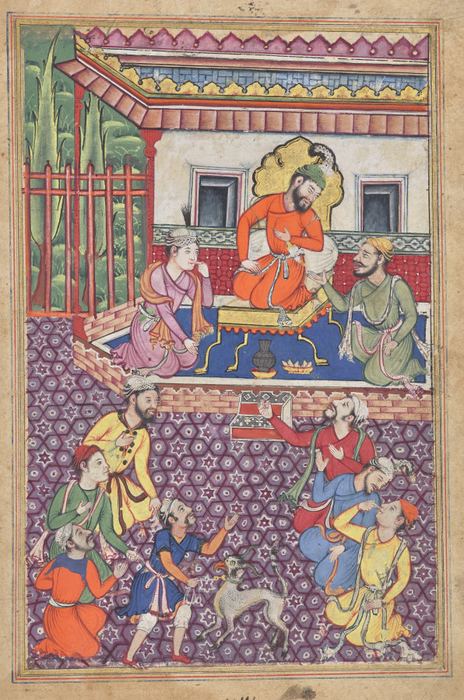 The court of the Raja of Ujjain, from a Tuti-nama (Tales of a Parrot): Forty-sixth Night
Unknown artist, c. 1560
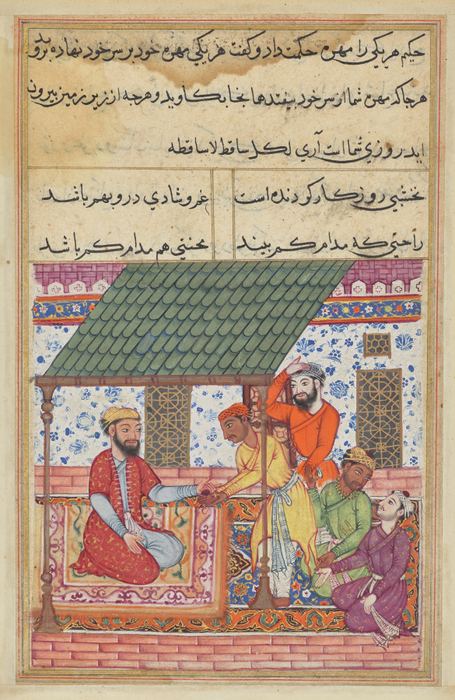 The four destitute friends go to a wise man who gives each one of them a magic shell to be placed on top of the turban, from a Tuti-nama (Tales of a Parrot): Forty-seventh Night
Unknown artist, c. 1560
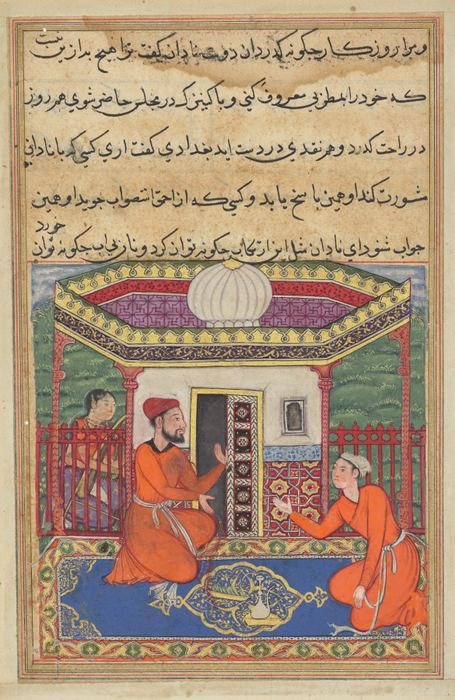 The young man of Baghdad solicits advice from a friend as his slave girl, who is adept at music, awaits, from a Tuti-nama (Tales of a Parrot): Forty-eighth Night
Unknown artist, c. 1560
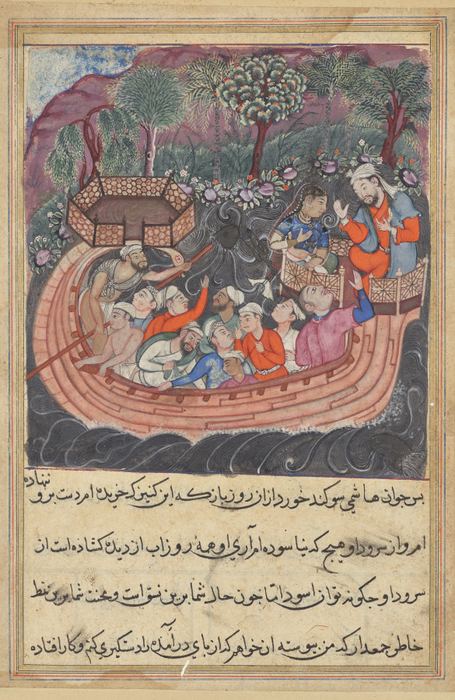 The young man of Baghdad reveals his true identity to the Hashimi, from a Tuti-nama (Tales of a Parrot: Forty-eighth Night
Unknown artist, c. 1560
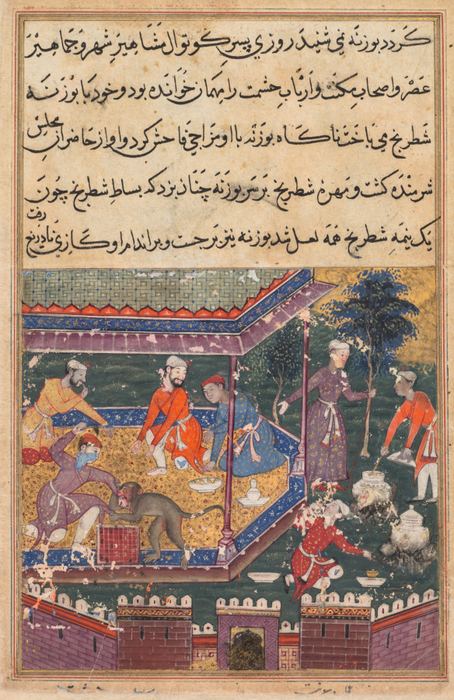 The wounded monkey bites the hand of the prince, his chessmate, in the presence of guests, from a Tuti-nama (Tales of a Parrot): Fifth Night
Dasavanta, c. 1560
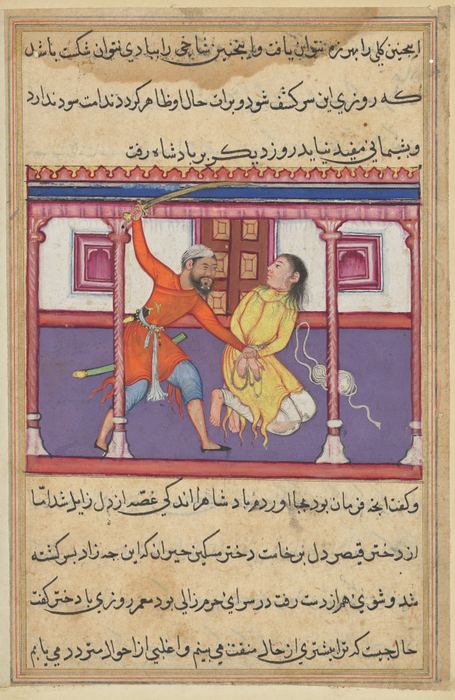 The guard spares the life of the slave when he learns that he is the son of the princess of the Rum, from a Tuti-nama (Tales of a Parrot): Fiftieth Night
Unknown artist, c. 1560
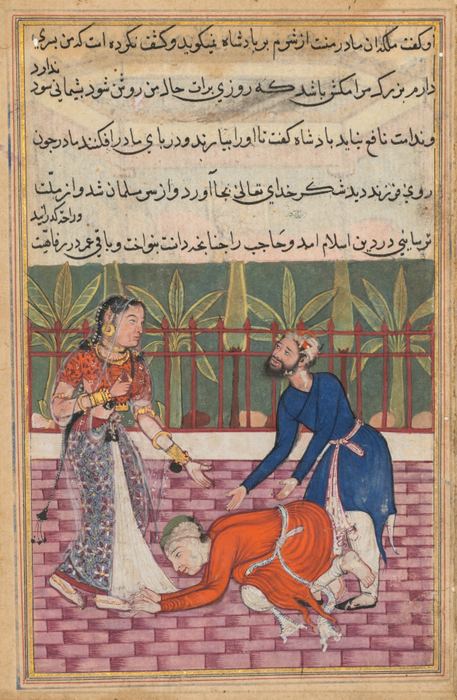 The guard restores the son who falls at his mother’s feet, from a Tuti-nama (Tales of a Parrot): Fiftieth Night
Unknown artist, c. 1560
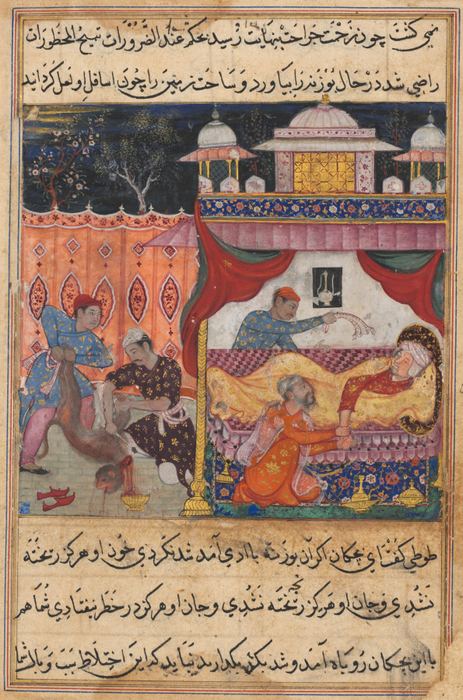 The monkey slain, his blood to be used as medicine for the ailing prince he has bitten, from a Tuti-nama (Tales of a Parrot): Fifth Night
Basawan, c. 1560
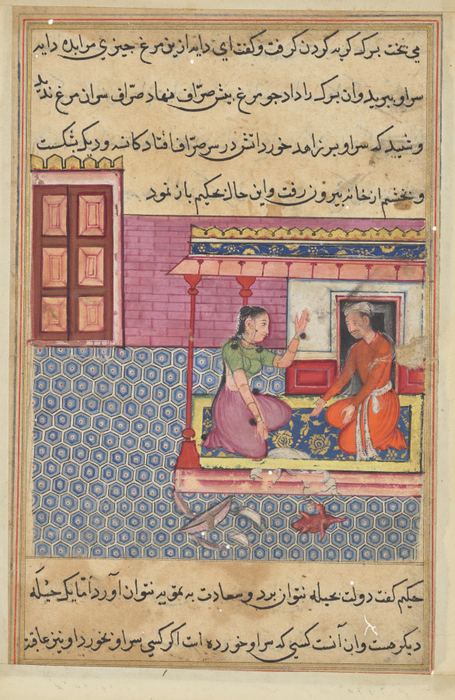 The pious man’s wife offers the seven-colored bird as food to her lover, but not finding its head, he breaks the pot and bowl in anger, from a Tuti-nama (Tales of a Parrot): Fifty-second Night
Unknown artist, c. 1560
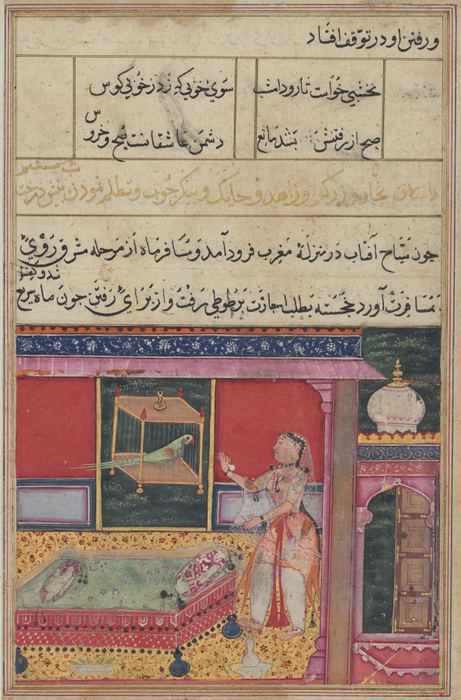 The Parrot Addresses Khujasta at the Beginning of the Sixth Night, from a Tuti-nama (Tales of a Parrot)
Dasavanta, c. 1560
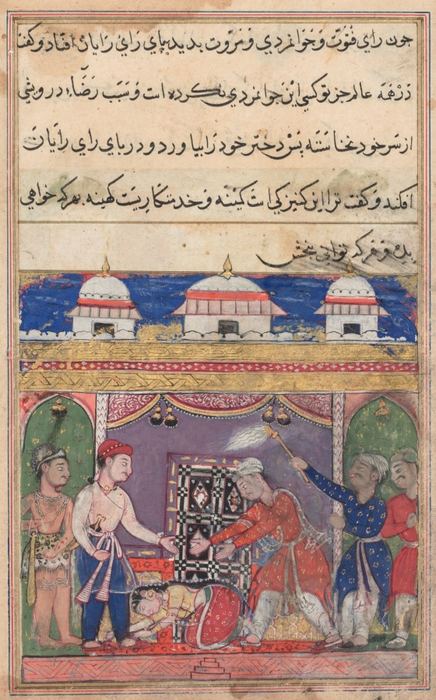 The king of Bahilistan offers his daughter to the King of Kings, from a Tuti-nama (Tales of a Parrot): Seventh Night
Unknown artist, c. 1560
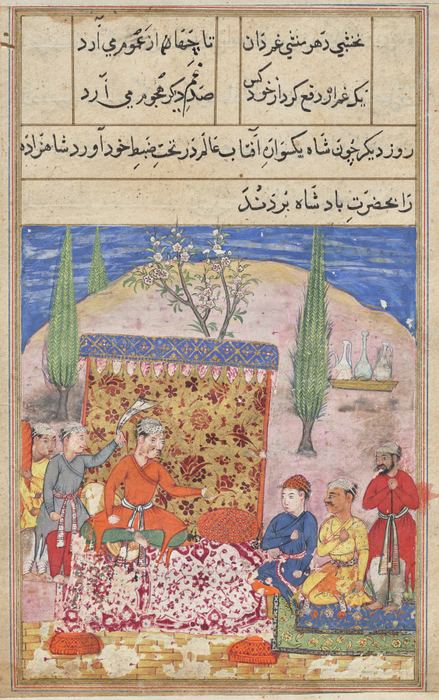 The young prince is presented to the king, his father, by his teacher, but refuses to speak, from a Tuti-nama (Tales of a Parrot): Eighth Night
Unknown artist, c. 1560
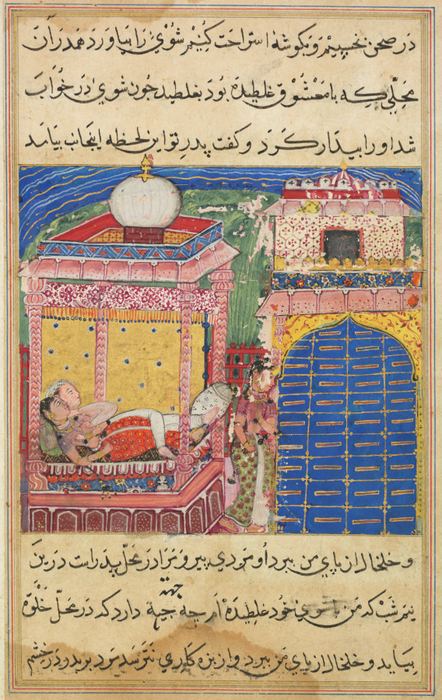 The deceitful wife persuades her husband to sleep in the same place where she had previously slept with her lover, from a Tuti-nama (Tales of a Parrot): Eighth Night
Unknown artist, c. 1560
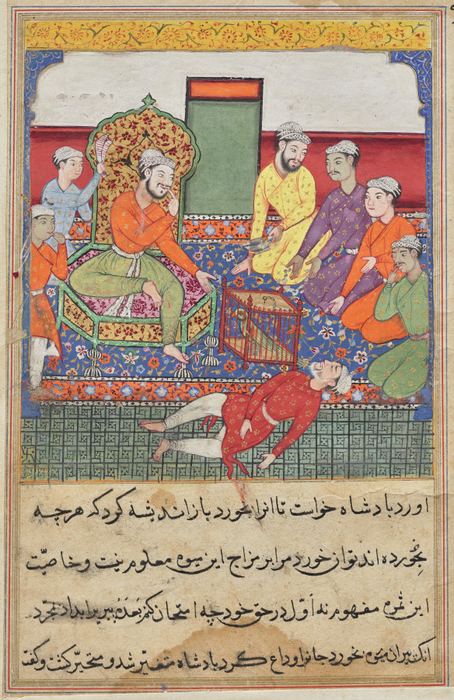 The old man eats of the fruit of the Tree of Life, but drops dead, from a Tuti-nama (Tales of a Parrot): Ninth Night
Lalu, c. 1560
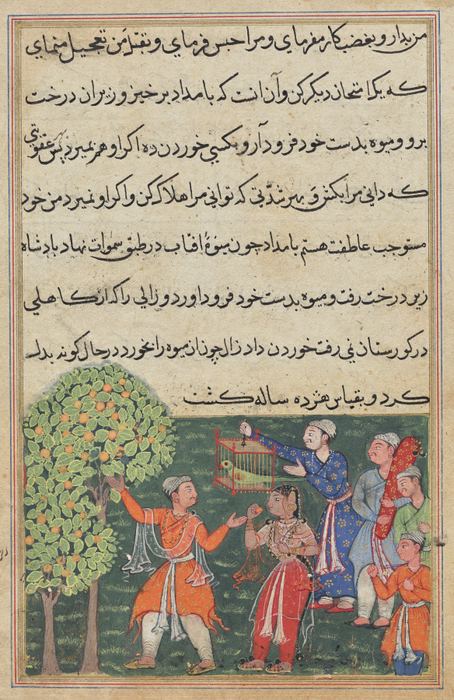 The king plucks fruit from the Tree of Life with his own hands and feeds it to a lady, from a Tuti-nama (Tales of a Parrot): Ninth Night
Suraju, c. 1560
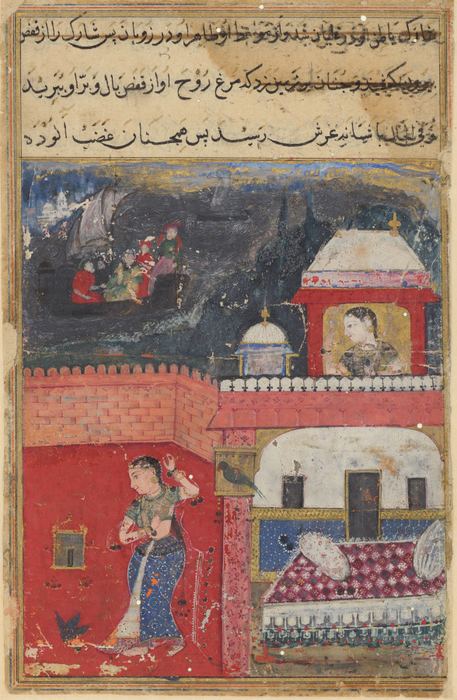 Khujasta kills the pet mynah who advises her not to be unfaithful to Maymun, her husband, from a Tuti-nama (Tales of the Parrot): First Night
Unknown artist, c. 1560
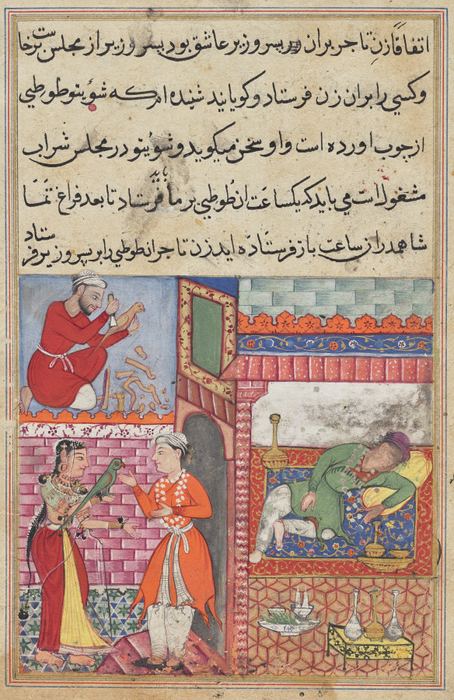 The vizier’s son receives the magic wooden parrot from the wife of the merchant, who is drunk, and has a replica made by a carpenter, from a Tuti-nama (Tales of a Parrot): Tenth Night
Lalu, c. 1560
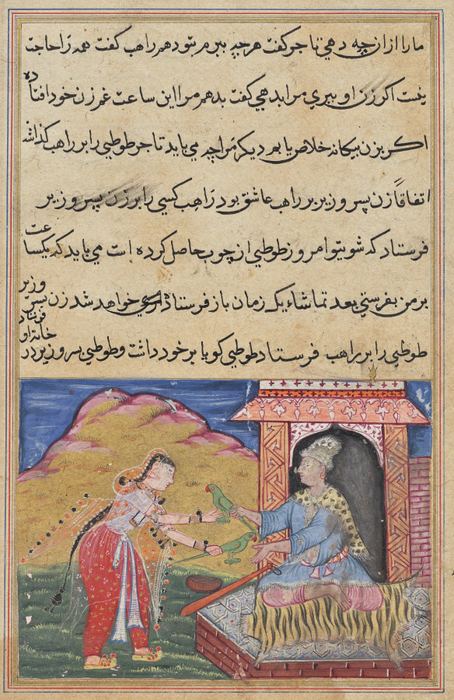 The wife of the son of the vizier brings the magic wooden parrot to her lover, the monk, who exchanges it for the replica, from a Tuti-nama (Tales of a Parrot): Tenth Night
Lalu, c. 1560
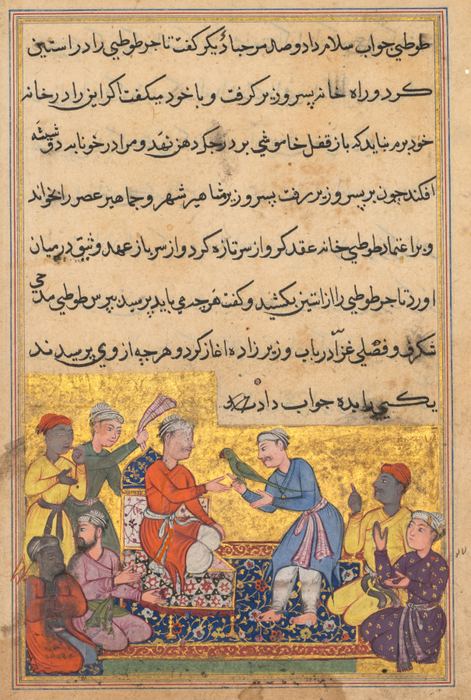 The magic parrot of the merchant talks to the vizier’s son, from a Tuti-nama (Tales of a Parrot): Tenth Night
Lalu, c. 1560
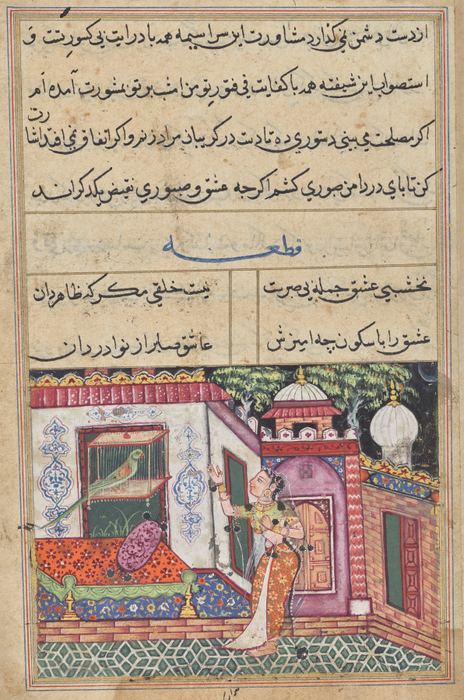 The Parrot Addresses Khujasta at the Beginning of the Eleventh Night, from a Tuti-nama (Tales of a Parrot)
Banavari 2, c. 1560
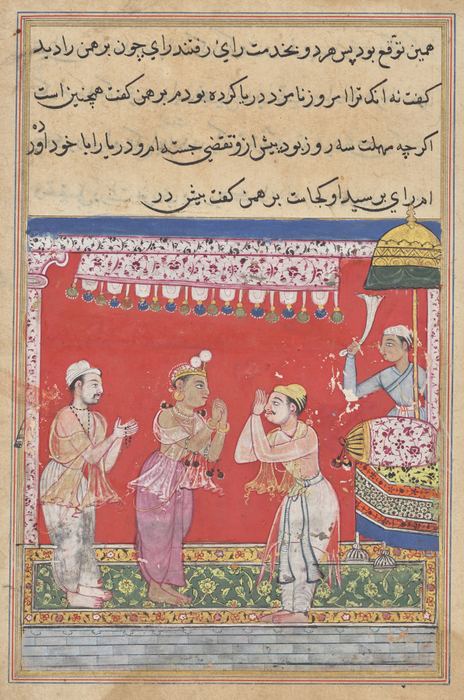 The king of the Ocean, having assumed human form, arrives at the court of the Raja, from a Tuti-nama (Tales of a Parrot): Eleventh Night
Ghulam 'Ali, c. 1560
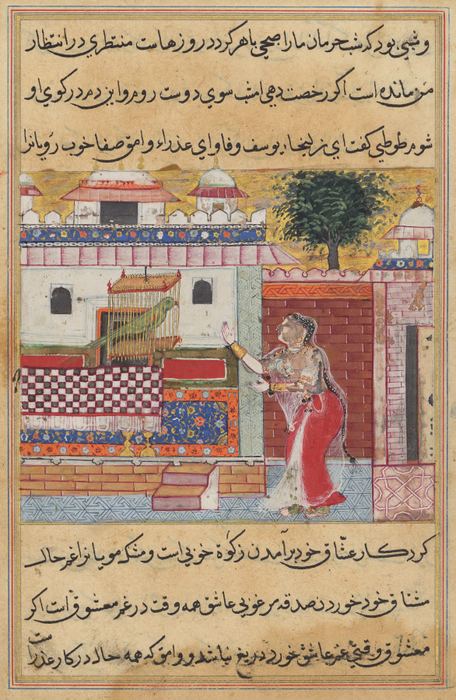 The Parrot Addresses Khujasta at the Beginning of the Twelfth Night, from a Tuti-nama (Tales of a Parrot)
Tara 1, c. 1560
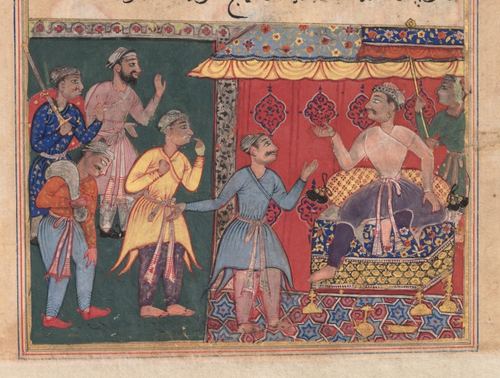 King Bhojaraja tries in vain to ascertain the whereabouts of the pearl from the four travelling companions, from a Tuti-nama (Tales of a Parrot): Twelfth Night
Unknown artist, c. 1560
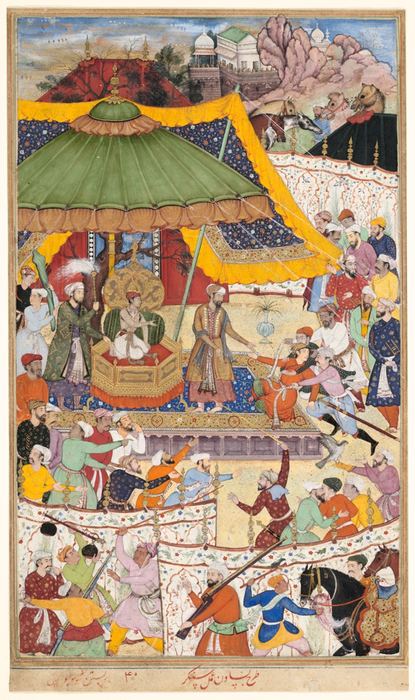 The Young Emperor Akbar Arrests the Insolent Shah Abu’l-Maali, Page from a Manuscript of the Akbarnama
Basawan, Mughal dynasty (1526-1857), c. 1590-1595
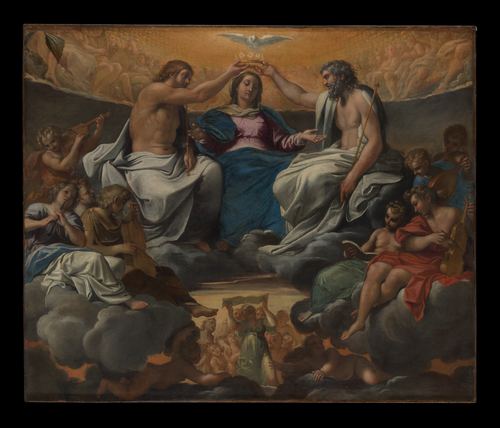 The Coronation of the Virgin
Annibale Carracci, after 1595
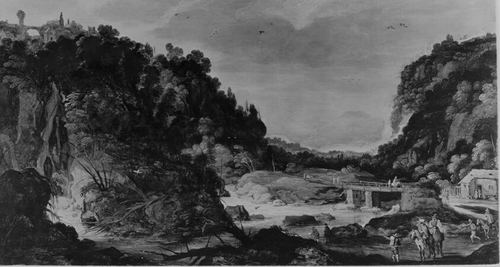 Mountain Landscape
Joos de Momper, II, c. 1610
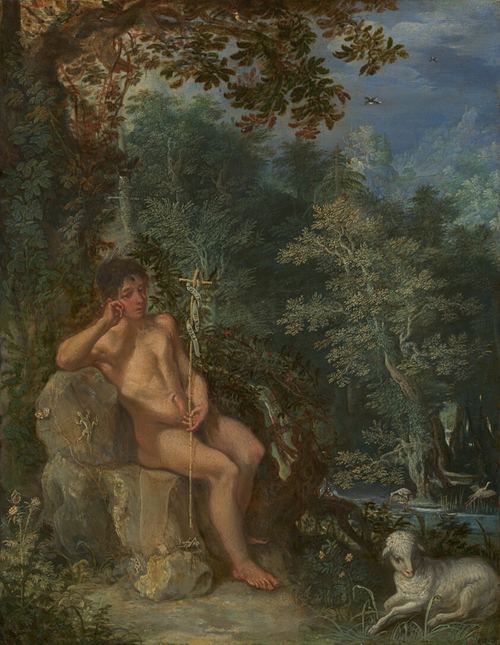 Saint John the Baptist in the Wilderness
Adam Elsheimer, c. 1605
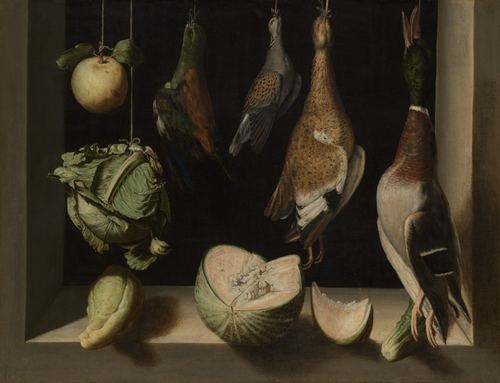 Still Life with Game Fowl
Juan Sánchez Cotán, c. 1600–3
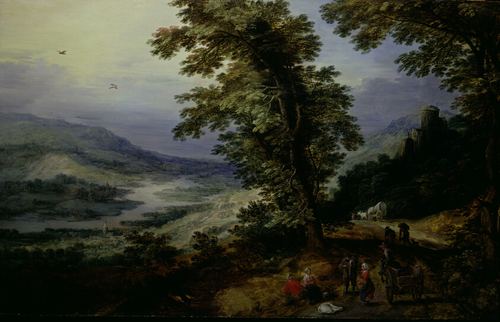 Mountain Road with Travelers
Joos de Momper, II, c. 1615
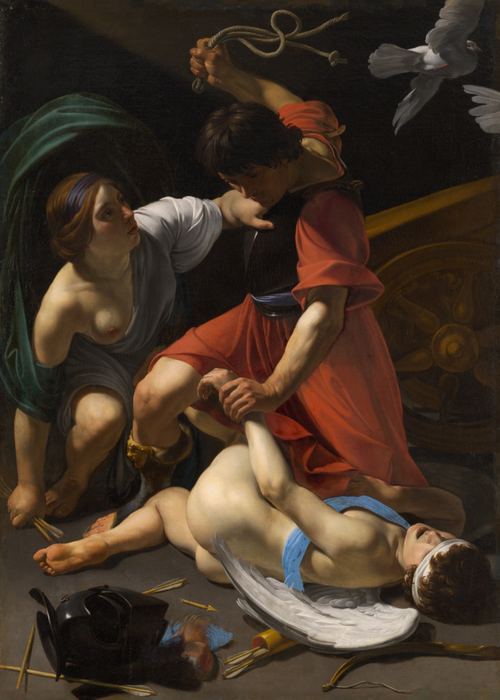 Cupid Chastised
Bartolomeo Manfredi, 1613
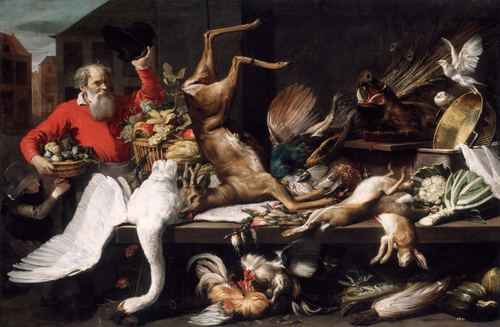 Still Life with Dead Game, Fruits, and Vegetables in a Market
Frans Snyders, 1614
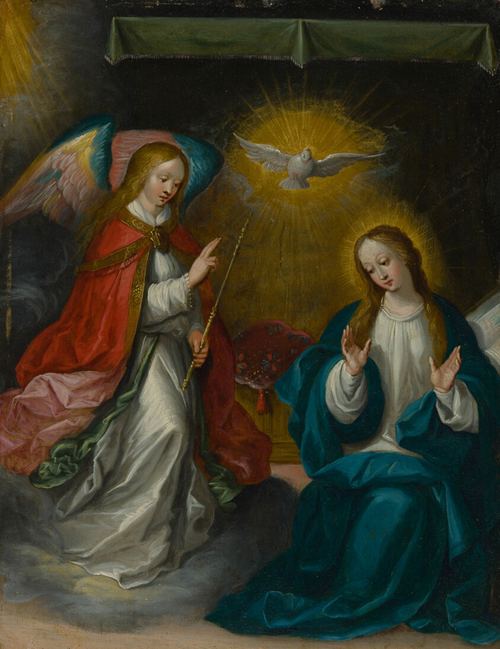 The Annunciation
Frans Francken the Younger, c. 1620
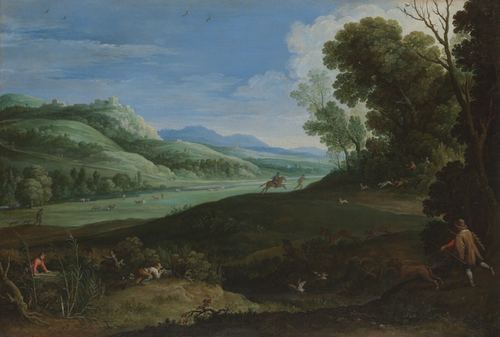 Landscape with Hunters
Paul Bril, 1619
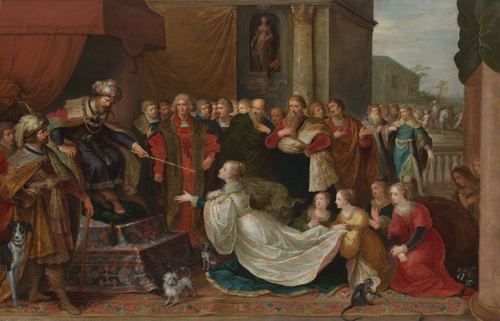 Esther Before Ahasuerus
Frans Francken the Younger, 1622
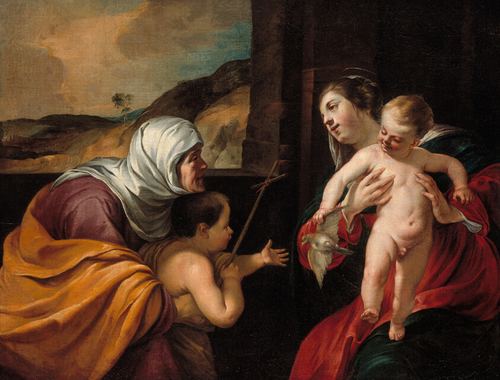 Virgin and Child with Saint Elizabeth and the Infant Saint John the Baptist
Jacques Blanchard, c. 1628
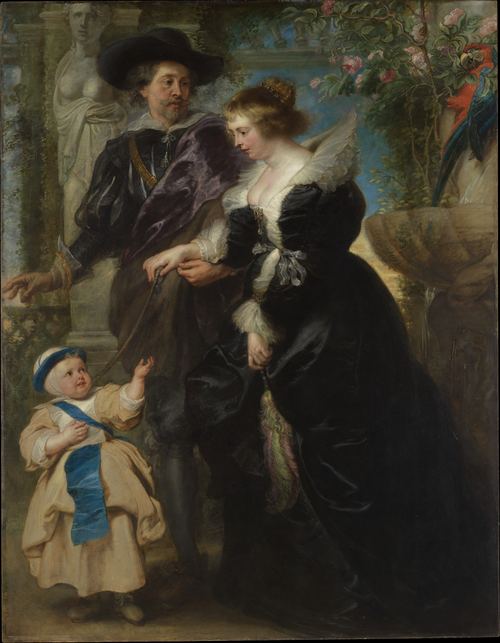 Rubens, Helena Fourment (1614–1673), and Their Son Frans (1633–1678)
Peter Paul Rubens, ca. 1635
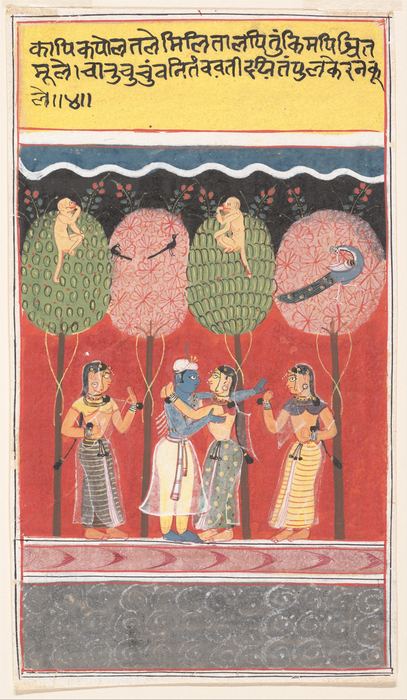 Krishna Revels with the Gopis: Page from a Dispersed Gita Govinda (Song of the Cowherds)
India (Madhya Pradesh, Malwa) artist, ca. 1630–40
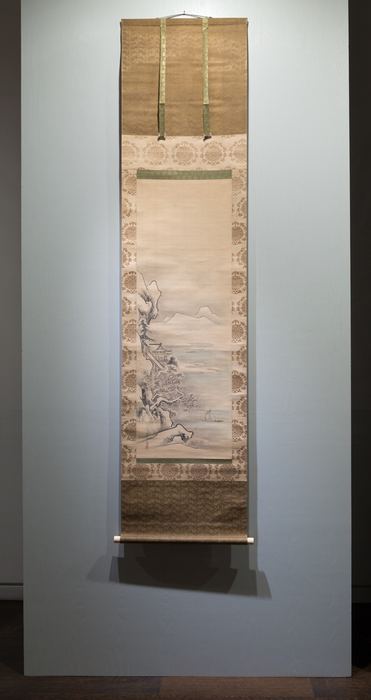 Fei Jiang-fang with a Crane
Kanô Tsunenobu, Late 17th–early 18th century
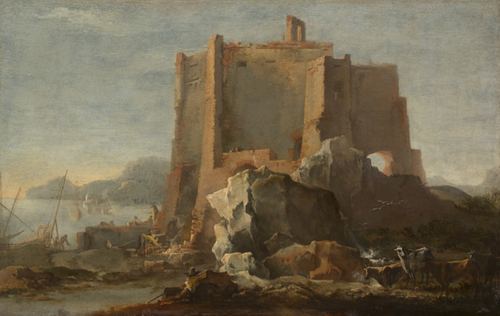 Landscape with Rock and Fortress
Domenico Gargiuli (Micco Spadaro), c. 1645
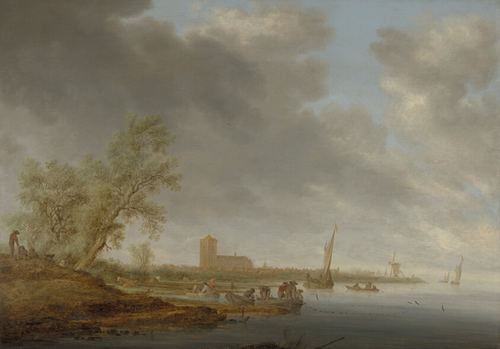 River Landscape with a View of Naarden
Salomon van Ruysdael, 1642
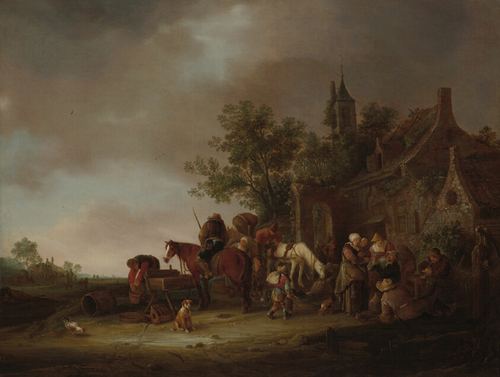 Travellers Halting at an Inn
Style of Isaac van Ostade, 1643
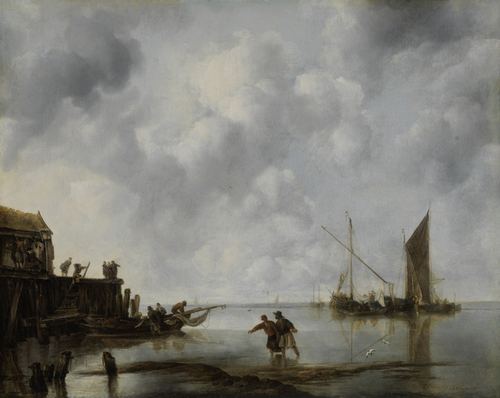 Fishing Boats in a Calm
Jan van de Cappelle, 1651
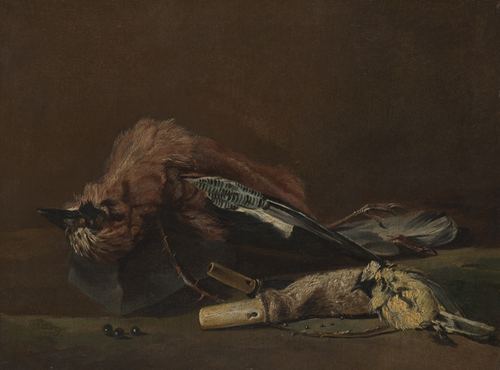 Dead Birds and Shot Bags
Pieter Boel, c. 1660
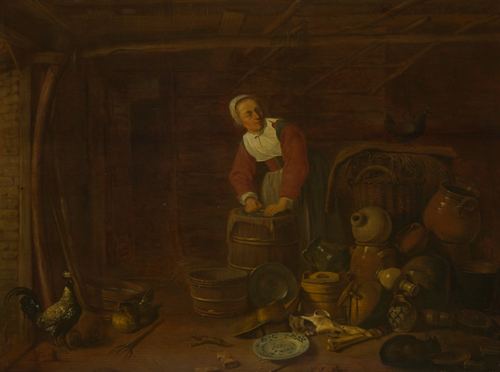 The Housekeeper
Hendrik Martensz. Sorgh, 1657
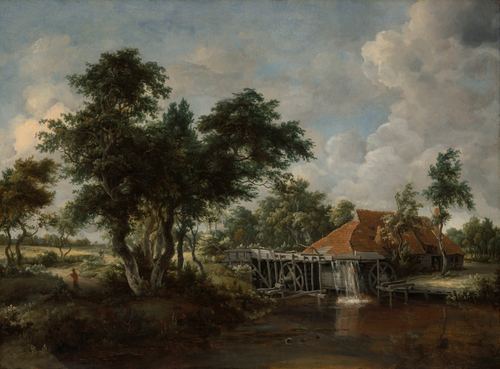 The Watermill with the Great Red Roof
Meindert Hobbema, c. 1665
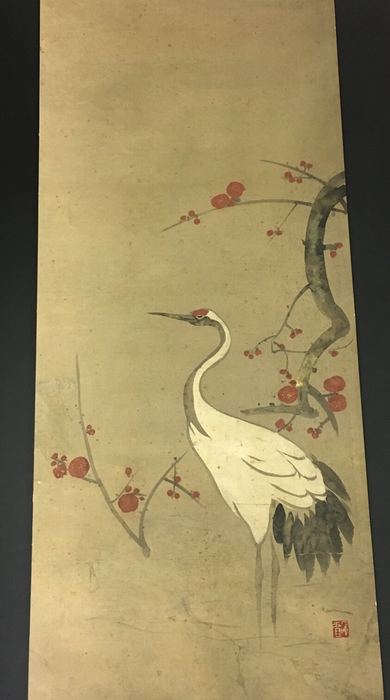 Red Plum Branch and a Crane
Ogata Kenzan, 19th century
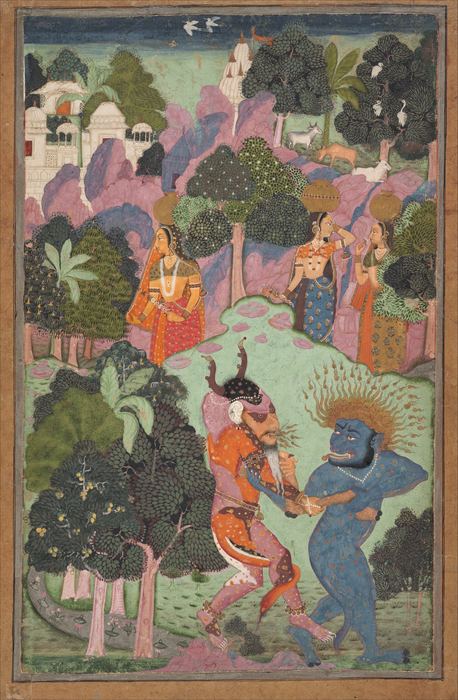 Demons Fighting Over an Animal Limb
India (Rajasthan, Bikaner or the Deccan) artist, late 17th century
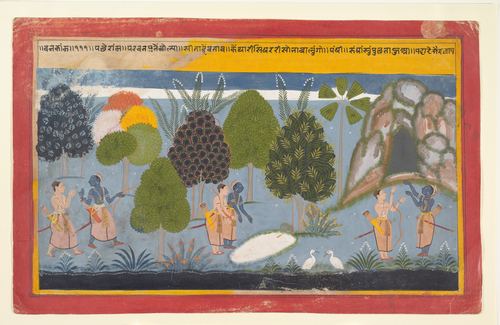 Rama and Lakshmana Search in Vain for Sita: Illustrated folio from a dispersed Ramayana series
India, Rajasthan, Mewar artist, ca. 1680–90
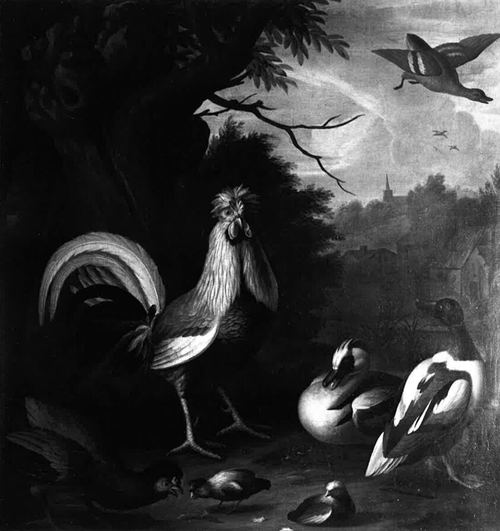 Birds in Landscape
Marmaduke Cradock, Date unknown
Showing 96 of 184.See all 184 in Explore