
Night and moonlight
Moonlight, lamplight and darkness. 121 works, grouped by the museums' own subject tags and titles. Paintings first, then in date order.
121works
54average lightness (0–100)
16average colourfulness
750–1920dates
Combined colour mix
Gold & ochre 39% · Grey 21% · Black 11% · Brown 10% · Pink 6%
Artists here: Utagawa Hiroshige (5), James McNeill Whistler (3), Yoshitoshi (3), Hilaire Germain Edgar Degas (2), Henri de Toulouse-Lautrec (2), George Inness (2), Edvard Munch (2), Utagawa Hiroshige II (Shigenobu) (1), Akseli Gallen-Kallela (1), Marianne von Werefkin (1), Robert Delaunay (1), Ernst Ludwig Kirchner (1)
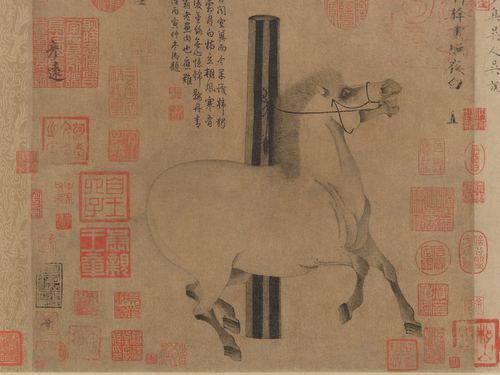 Night-Shining White
Han Gan, ca. 750
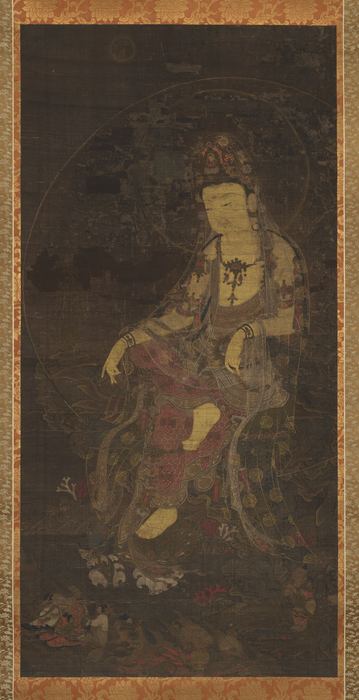 Water-moon Avalokiteshvara
Unidentified artist, first half of the 14th century
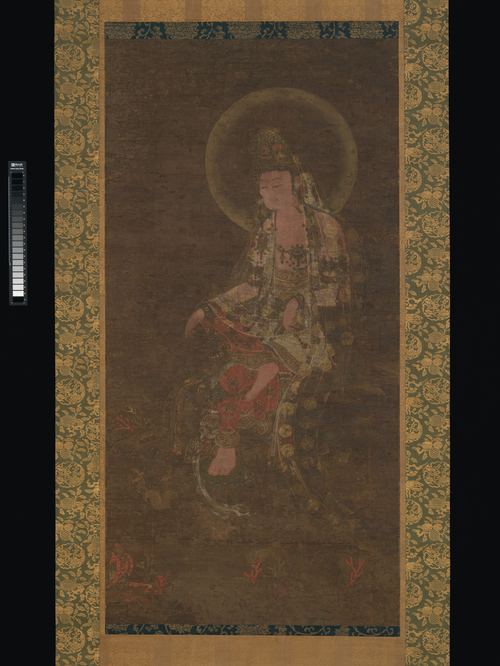 Water-Moon Avalokiteshvara
Unidentified artist, 14th century
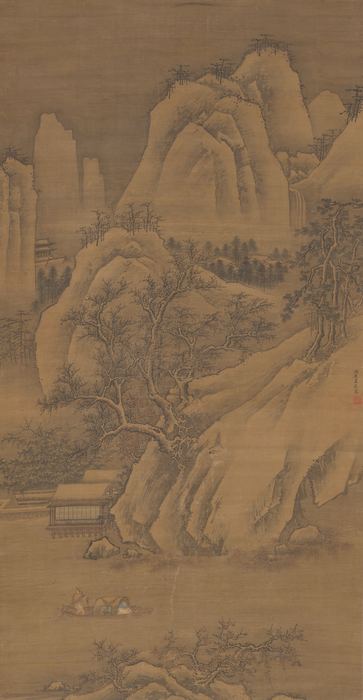 Visiting Dai Kui on a Snowy Night 雪夜訪戴圖
Xia Kui, Ming dynasty (1368–1644), 15th century
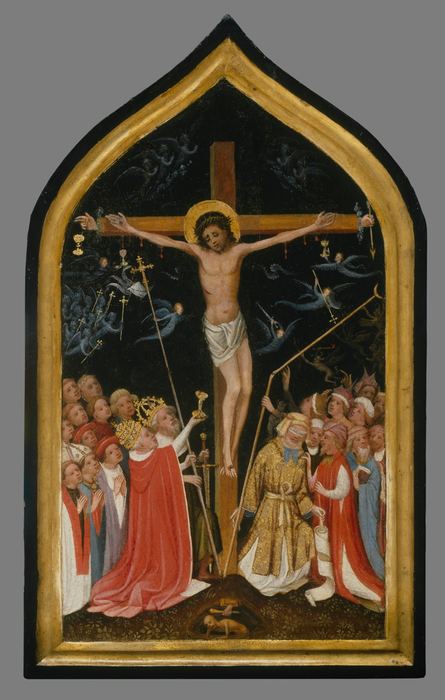 Christ on the Living Cross
Follower of the Master of Saint Veronica, c. 1420
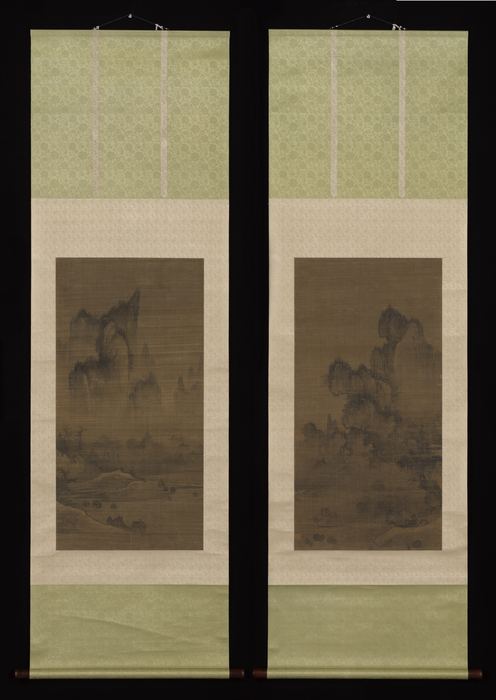 Evening bell from mist-shrouded temple (left); Autumn moon over Lake Dongting (right)
An Kyŏn, ca. 1450–1500
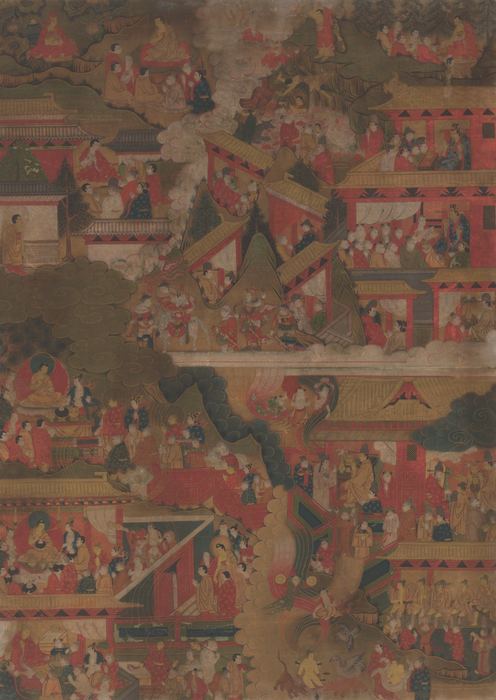 Birth Stories of the Buddha Udayin, the Wealthy King, and Brahma Joy of the Moon, from a set based on the Hundred Jatakas of the Third Karmapa, Rangjung Dorje (1284-1339)
Unknown artist, c. 1450–1550
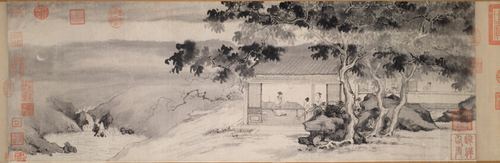 Drinking at Night
Tang Yin, Ming dynasty (1368–1644); c. 1520/23
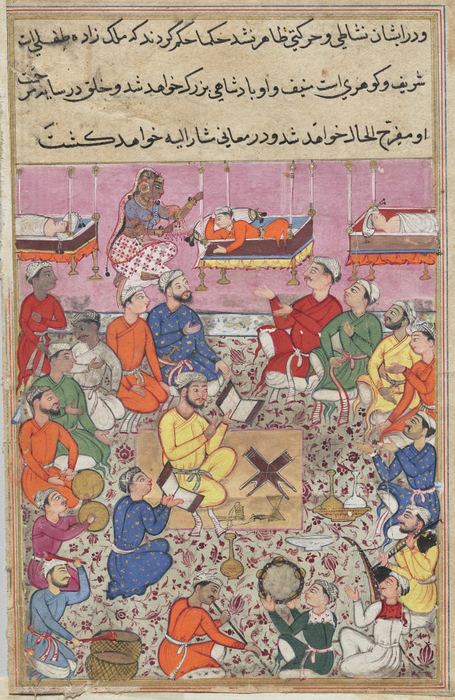 The infant son of the king of Isfahan responds to music, from a Tuti-nama (Tales of a Parrot): Thirteenth Night
Unknown artist, c. 1560
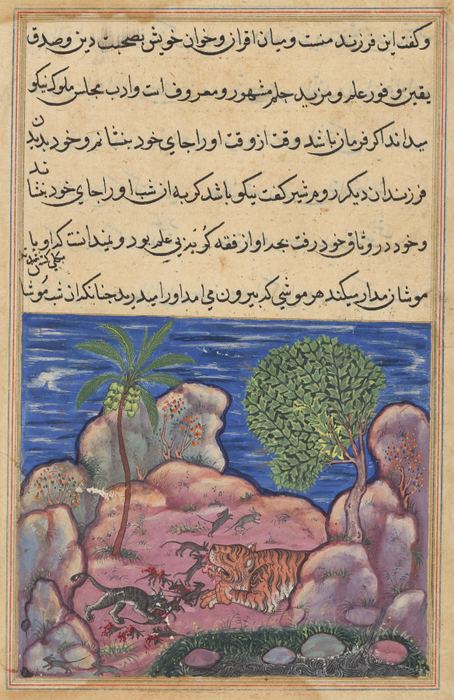 The cat attacks the mice which disturb the lion, from a Tuti-nama (Tales of a Parrot): Fifteenth Night
Unknown artist, c. 1560
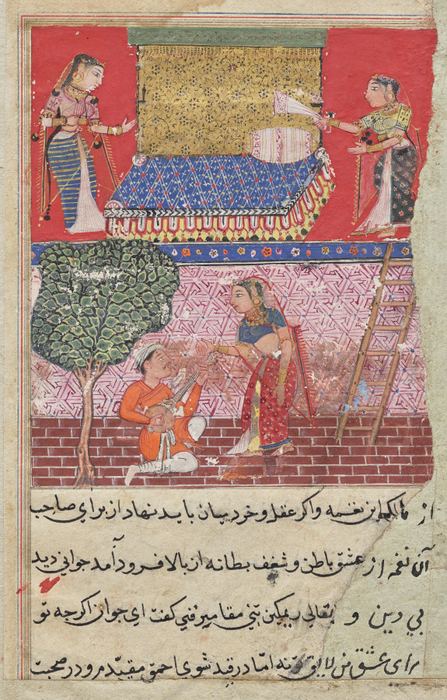 The daughter-in-law of the king of Banaras, charmed by the music of a vagabond, comes down to meet him, from a Tuti-nama (Tales of a Parrot): Sixteenth Night
Unknown artist, c. 1560
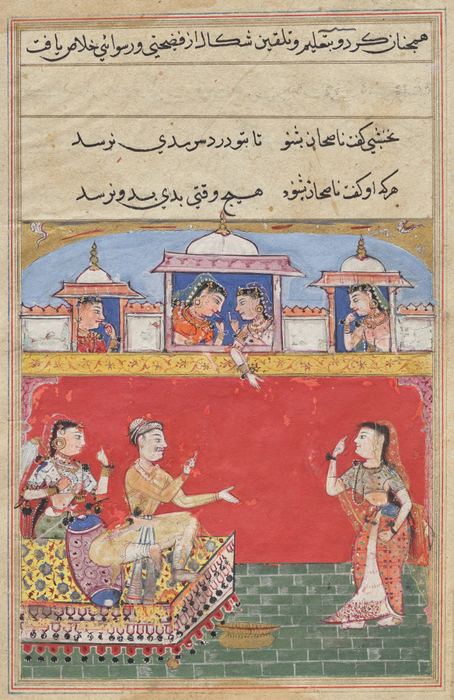 The daughter-in-law returns from her misadventure, feigning insanity, from a Tuti-nama (Tales of a Parrot): Sixteenth Night
Unknown artist, c. 1560
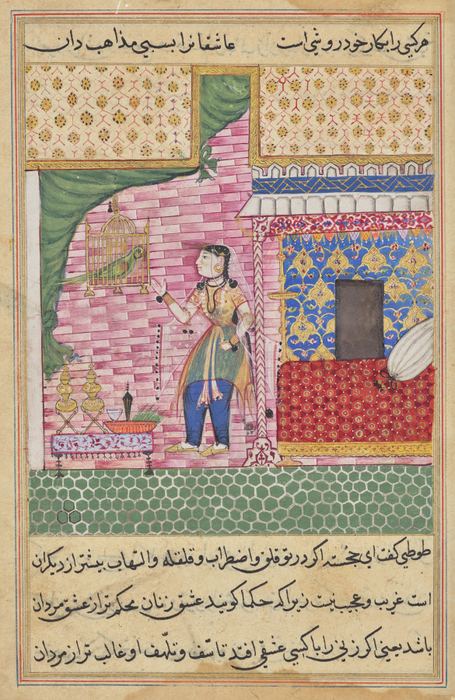 The Parrot Addresses Khujasta at the Beginning of the Seventeenth Night, from a Tuti-nama (Tales of a Parrot)
Sravana, c. 1560
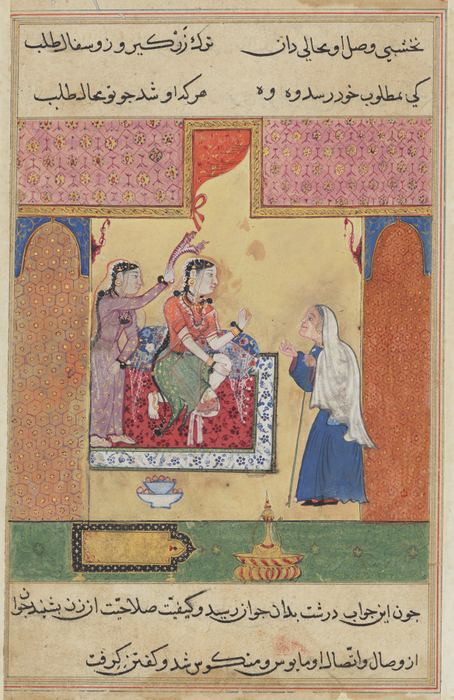 The old procuress conveys the young man’s message of love to Mansur’s wife, from a Tuti-nama (Tales of a Parrot: Seventeenth Night
Sravana, c. 1560
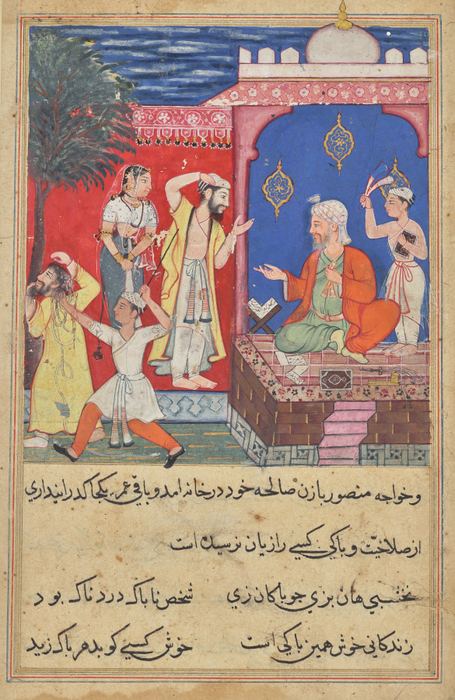 The false Mansur punished before the judge and expelled from the city, from a Tuti-nama (Tales of a Parrot): Seventeenth Night
Unknown artist, c. 1560
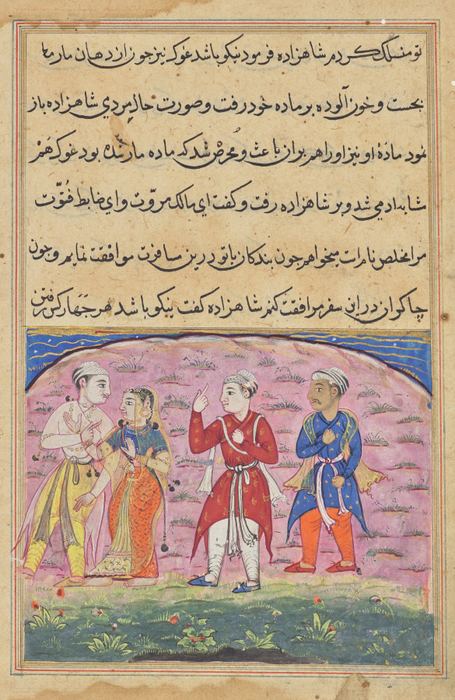 The prince and Nikfal are joined by Khalis and the Mukhlis who are the grateful snake and frog in human form, from a Tuti-nama (Tales of a Parrot): Eighteenth Night
Unknown artist, c. 1560
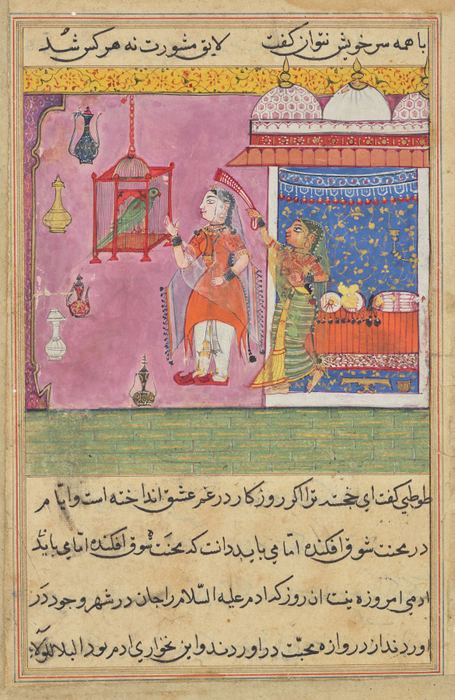 The Parrot Addresses Khujasta at the Beginning of the Nineteenth Night, from a Tuti-nama (Tales of a Parrot)
Unknown artist, c. 1560
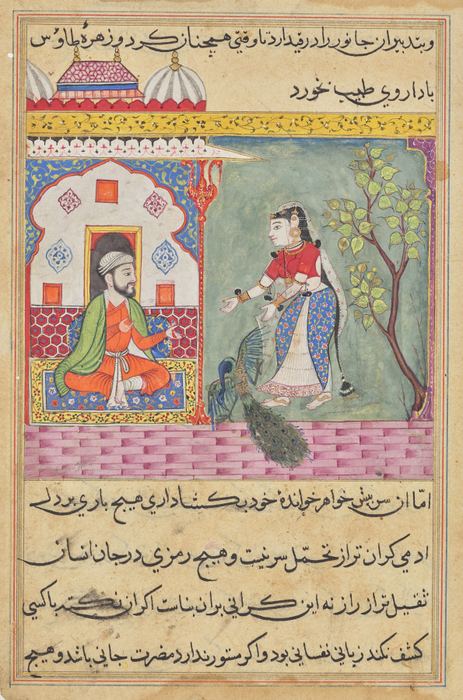 The Brahman’s wife who killed a peacock and ate its gallbladder on the physician’s advice, from a Tuti-nama (Tales of a Parrot): Nineteenth Night
Unknown artist, c. 1560
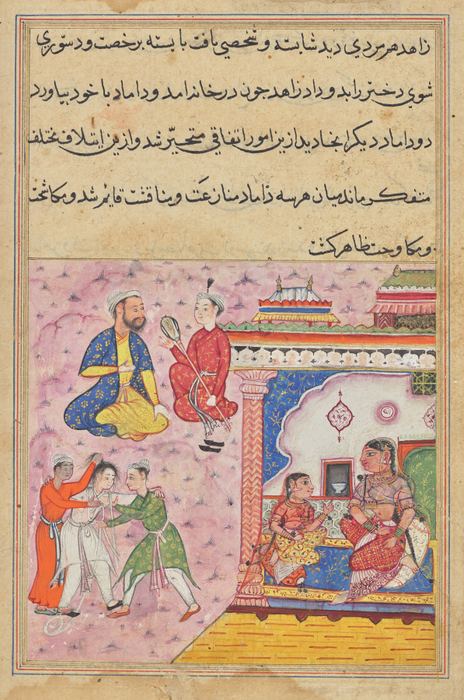 Three suitors fight amongst themselves for the hand of the devotee’s daughter, from a Tuti-nama (Tales of a Parrot): Twentieth Night
Unknown artist, c. 1560
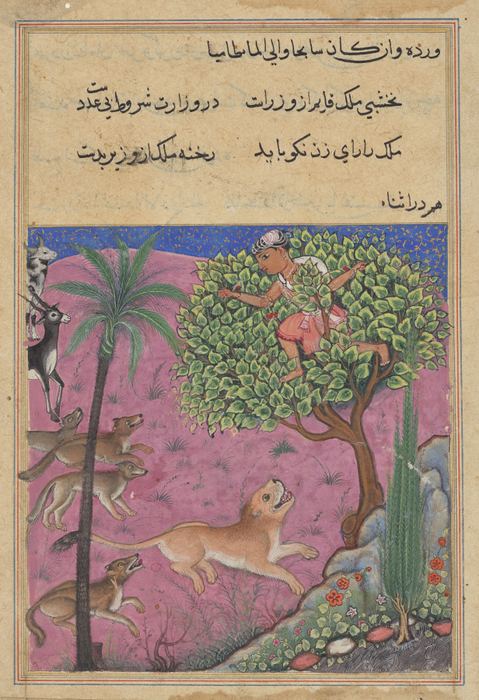 The wolf and the jackal, serving as viziers, instigate the lion who pursues the Brahman up a tree, from a Tuti-nama (Tales of a Parrot): Twenty-first Night
Unknown artist, c. 1560
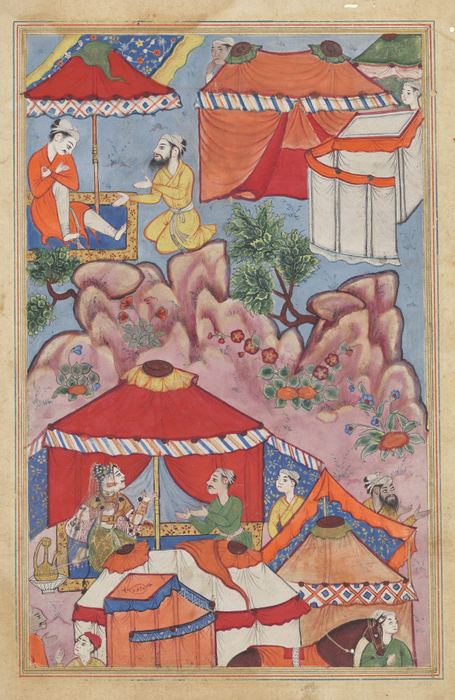 Bashir confides his love for Habbaza to an Arab friend, and sends him to her with a message, from a Tuti-nama (Tales of a Parrot): Twenty-fourth Night
Unknown artist, c. 1560
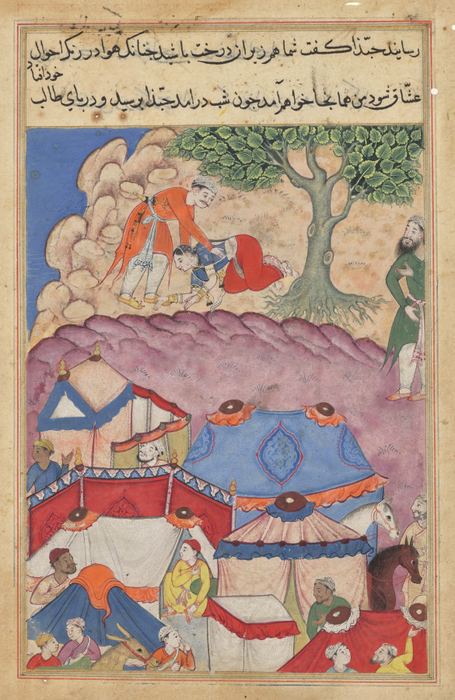 Habbaza meets Bashir under a tree, from a Tuti-nama (Tales of a Parrot): Twenty-fourth Night
Unknown artist, c. 1560
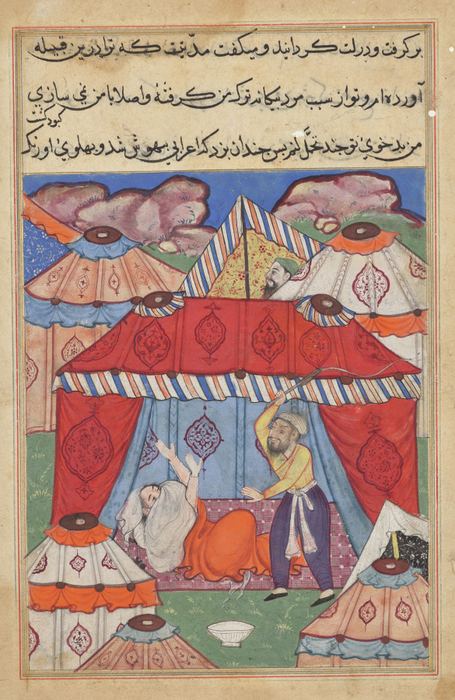 The disguised Arab, substituting for Habbaza, is whipped by her husband for refusing a bowl of milk, from a Tuti-nama (Tales of a Parrot): Twenty-fourth Night
Unknown artist, c. 1560
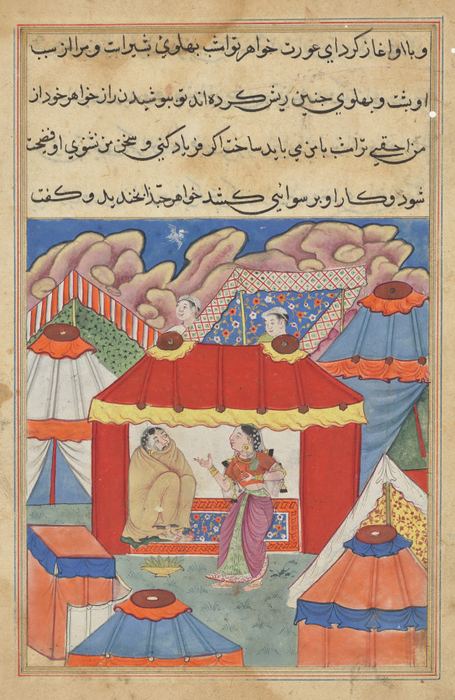 Habbaza’s sister, who is sent to console her, discovers the disguised Arab in her place, from a Tuti-nama (Tales of a Parrot): Twenty-fourth Night
Unknown artist, c. 1560
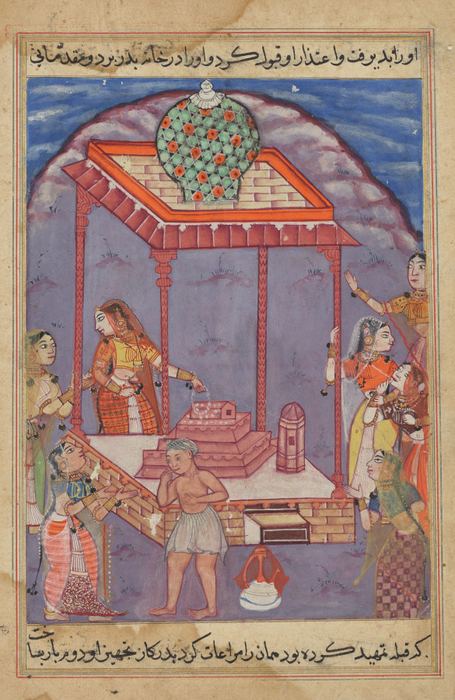 The destitute Mukhtar meets his wife Maimuna at a holy shrine, from a Tuti-nama (Tales of a Parrot): Twenty-fifth Night
Unknown artist, c. 1560
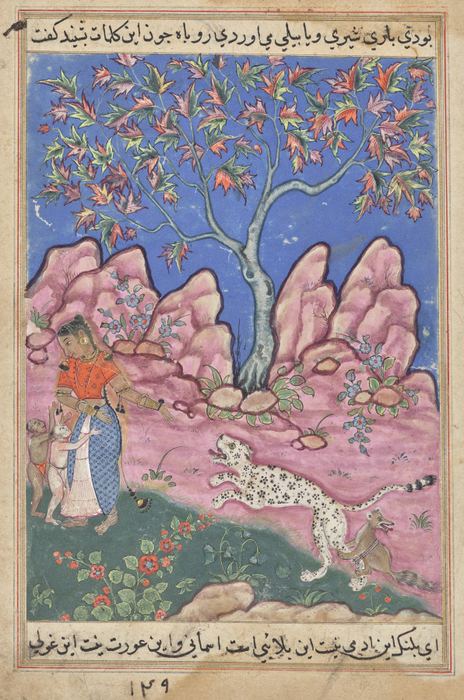 The woman conversing with her children, as the leopard returns, egged on by a fox who is tied to his leg, from a Tuti-nama (Tales of a Parrot): Thirtieth Night
Unknown artist, c. 1560
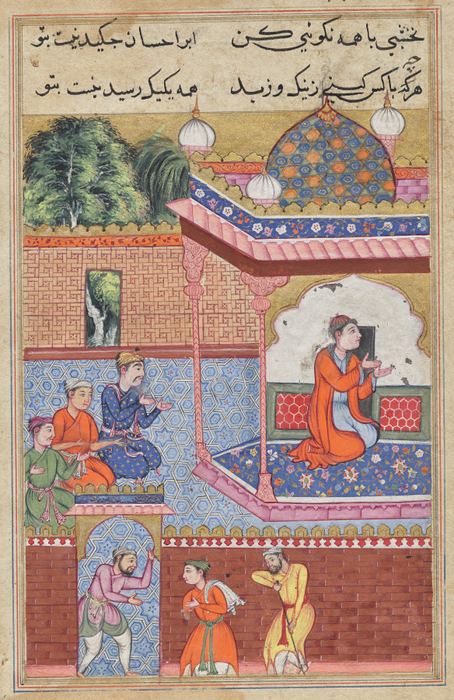 Kaiwan, Latif, and Sharif arrive at a house of worship, where they seek help from Khurshid who has become a mystical healer, from a Tuti-Nama (Tales of a Parrot): Thirty-second Night
Unknown artist, c. 1560
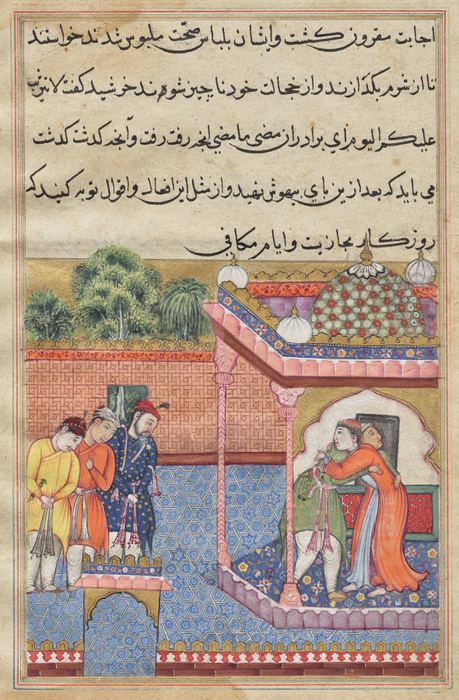 Khurshid reunited with her husband Utarid, from a Tuti-nama (Tales of a Parrot): Thirty-second Night
Unknown artist, c. 1560
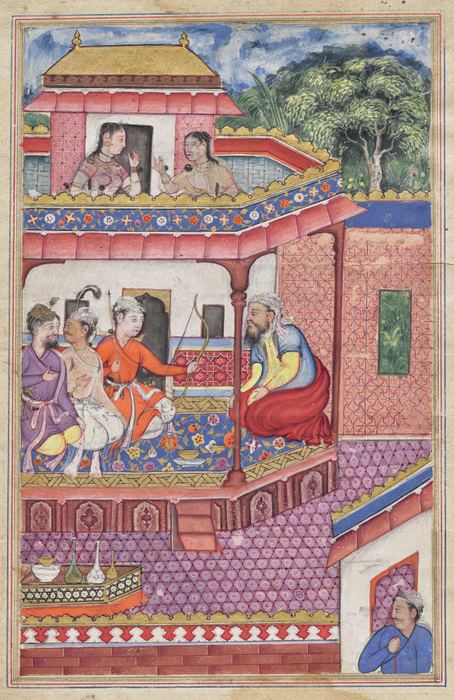 The three young men present themselves as suitors for the hand of Zuhra, the daughter of the merchant of Kabul, from a Tuti-nama (Tales of a Parrot): Thirty-fourth Night
Unknown artist, c. 1560
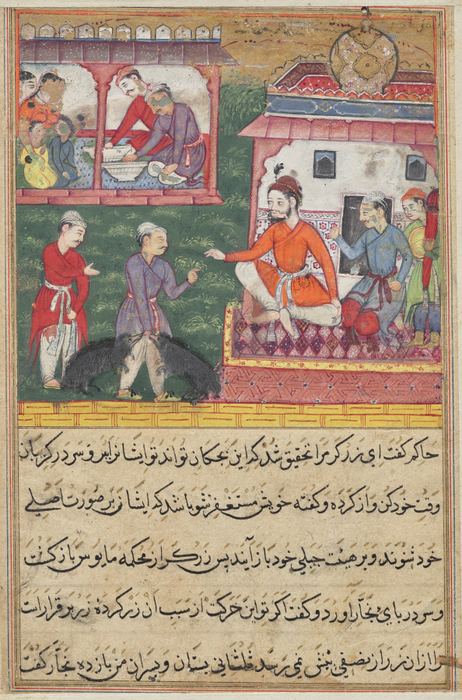 The goldsmith judged; the bear cubs trained by the carpenter as though they were his sons, from a Tuti-nama (Tales of a Parrot): Third Night
Unknown artist, c. 1560
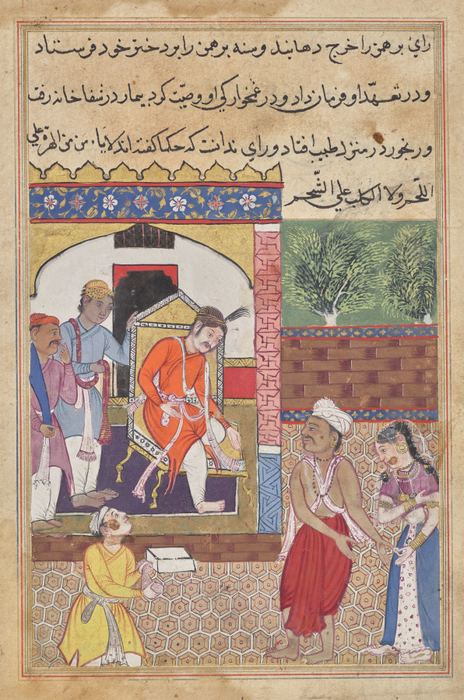 The magician, disguised as a Brahman, visits the king of Babylon, from a Tuti-nama (Tales of a Parrot): Thirty-fifth Night
Unknown artist, c. 1560
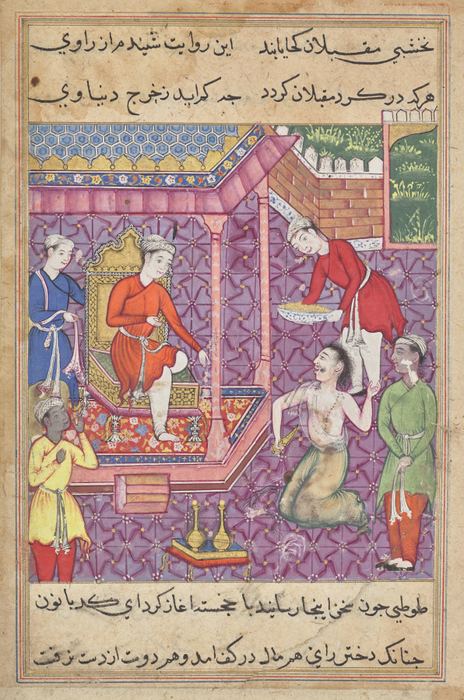 The magician disguised as a Brahman returns to claim his “daughter-in-law,” from a Tuti-nama (Tales of a Parrot): Thirty-fifth Night
Unknown artist, c. 1560
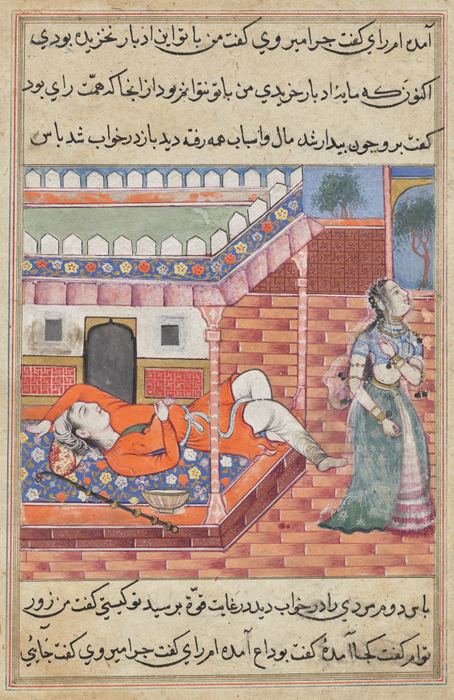 The king dreams of a lady, the personification of wealth, departing from him on account of his purchasing a bowl and a staff from a yogi, from a Tuti-nama (Tales of a Parrot): Thirty-sixth Night
Unknown artist, c. 1560
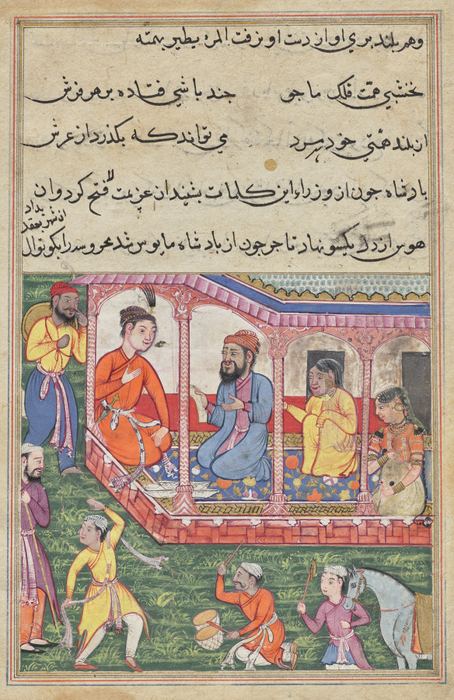 Mahrusa’s marriage to the prefect of the city, from a Tuti-nama (Tales of a Parrot): Thirty-sixth Night
Unknown artist, c. 1560
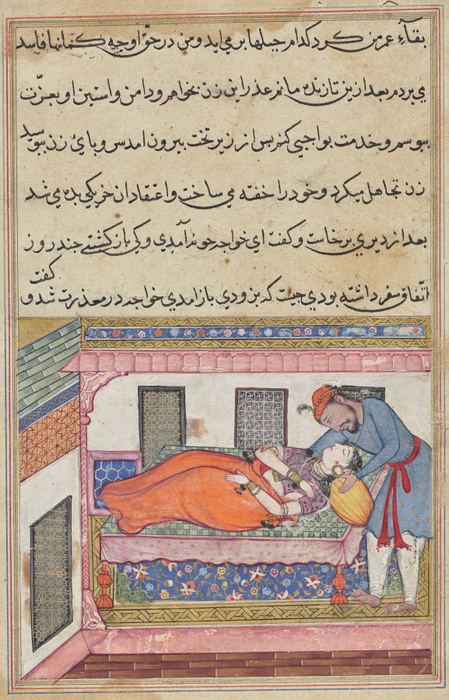 Shahr-Arai’s husband bends to kiss his wife who feigns sleep, from a Tuti-nama (Tales of a Parrot): Fortieth Night
Unknown artist, c. 1560
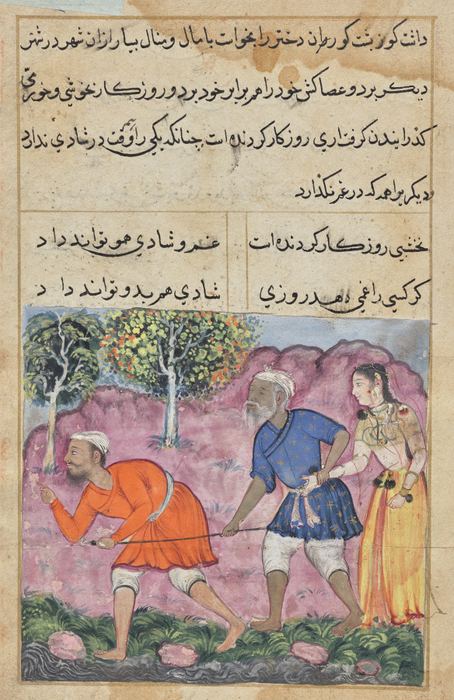 The Raja’s daughter, born with three breasts, accompanies her blind husband and his hunchback guide on a journey, from a Tuti-nama (Tales of a Parrot): Forty-second Night
Unknown artist, c. 1560
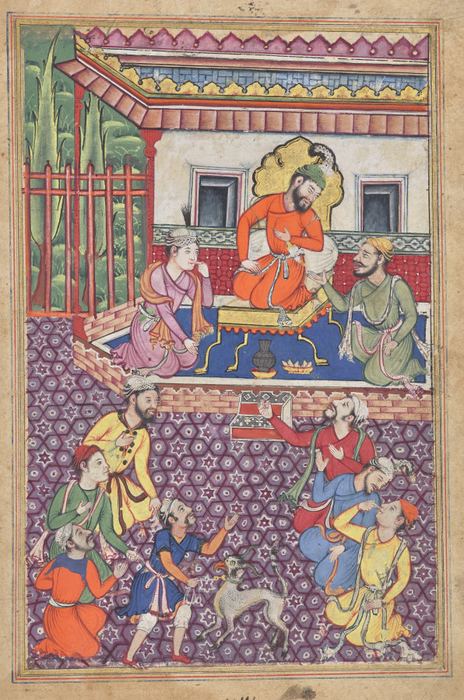 The court of the Raja of Ujjain, from a Tuti-nama (Tales of a Parrot): Forty-sixth Night
Unknown artist, c. 1560
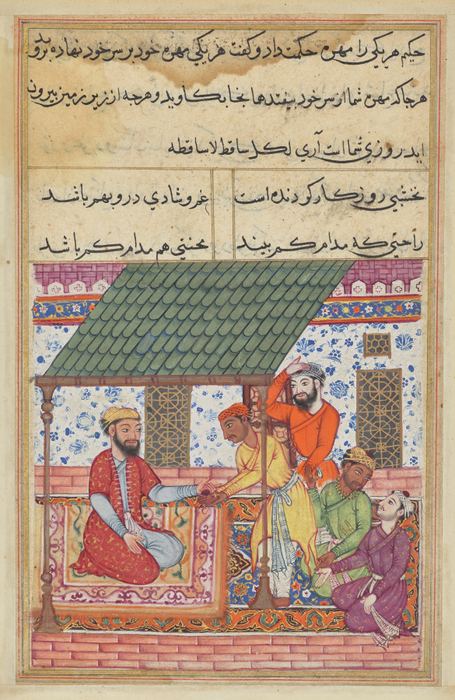 The four destitute friends go to a wise man who gives each one of them a magic shell to be placed on top of the turban, from a Tuti-nama (Tales of a Parrot): Forty-seventh Night
Unknown artist, c. 1560
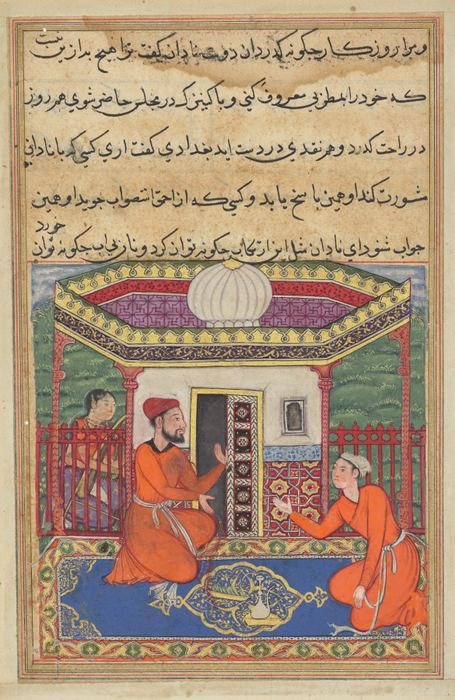 The young man of Baghdad solicits advice from a friend as his slave girl, who is adept at music, awaits, from a Tuti-nama (Tales of a Parrot): Forty-eighth Night
Unknown artist, c. 1560
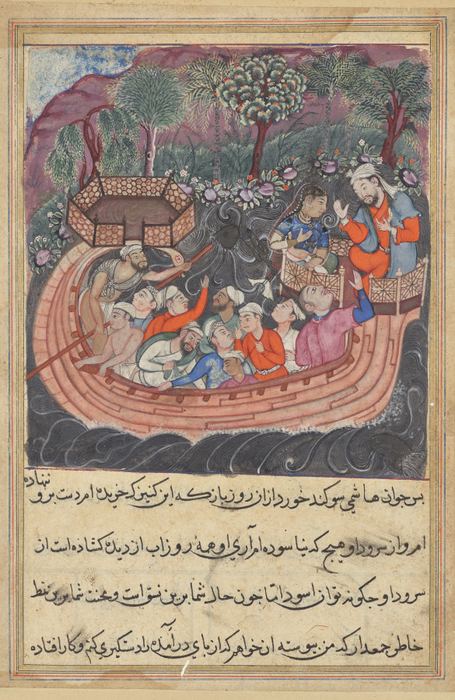 The young man of Baghdad reveals his true identity to the Hashimi, from a Tuti-nama (Tales of a Parrot: Forty-eighth Night
Unknown artist, c. 1560
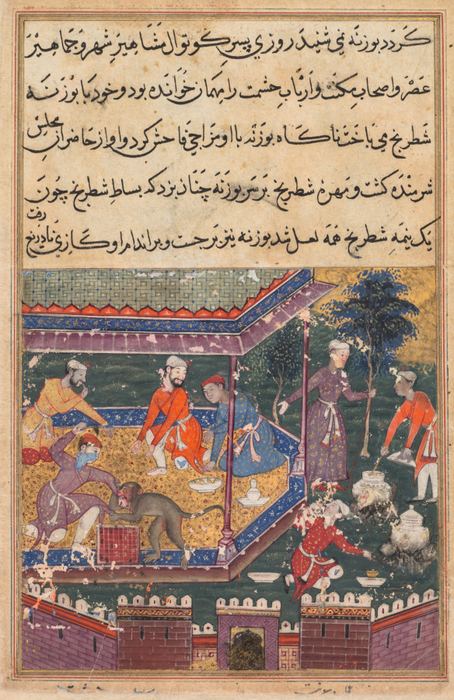 The wounded monkey bites the hand of the prince, his chessmate, in the presence of guests, from a Tuti-nama (Tales of a Parrot): Fifth Night
Dasavanta, c. 1560
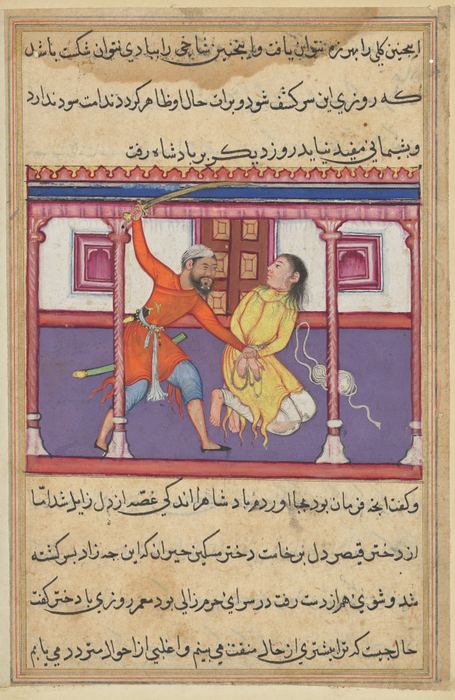 The guard spares the life of the slave when he learns that he is the son of the princess of the Rum, from a Tuti-nama (Tales of a Parrot): Fiftieth Night
Unknown artist, c. 1560
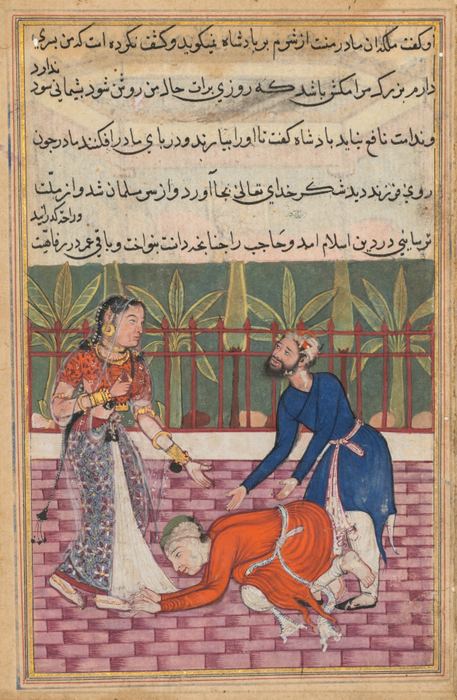 The guard restores the son who falls at his mother’s feet, from a Tuti-nama (Tales of a Parrot): Fiftieth Night
Unknown artist, c. 1560
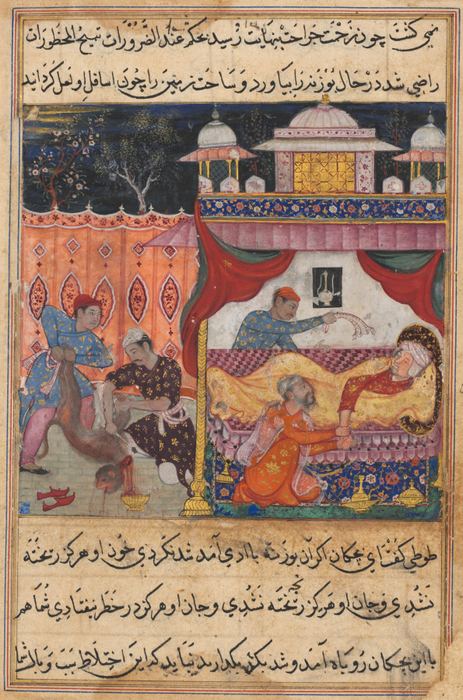 The monkey slain, his blood to be used as medicine for the ailing prince he has bitten, from a Tuti-nama (Tales of a Parrot): Fifth Night
Basawan, c. 1560
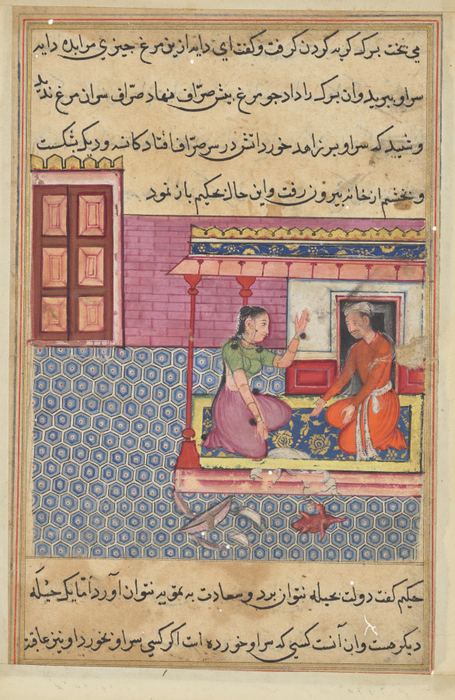 The pious man’s wife offers the seven-colored bird as food to her lover, but not finding its head, he breaks the pot and bowl in anger, from a Tuti-nama (Tales of a Parrot): Fifty-second Night
Unknown artist, c. 1560
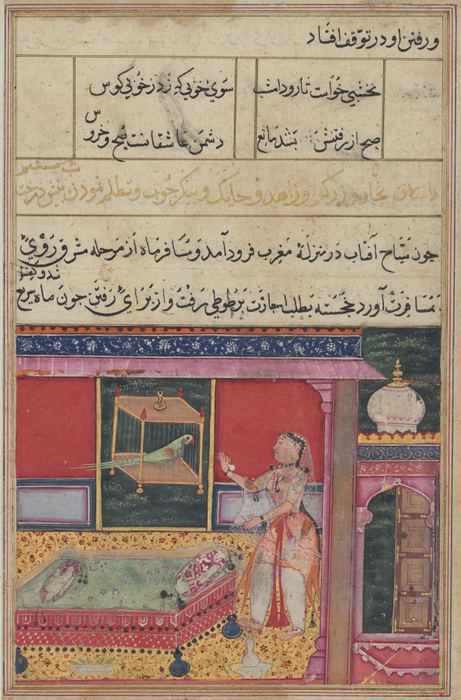 The Parrot Addresses Khujasta at the Beginning of the Sixth Night, from a Tuti-nama (Tales of a Parrot)
Dasavanta, c. 1560
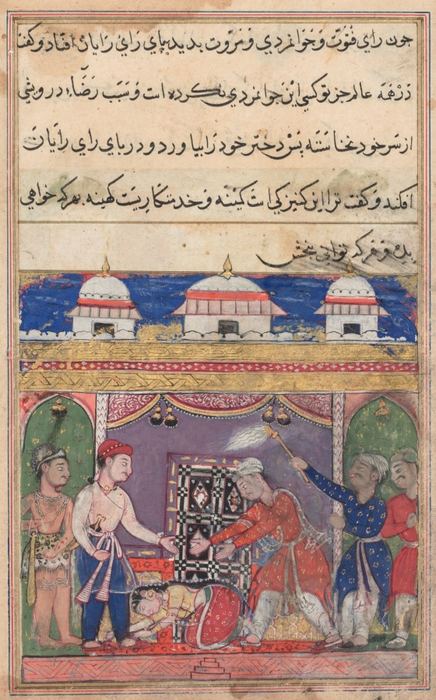 The king of Bahilistan offers his daughter to the King of Kings, from a Tuti-nama (Tales of a Parrot): Seventh Night
Unknown artist, c. 1560
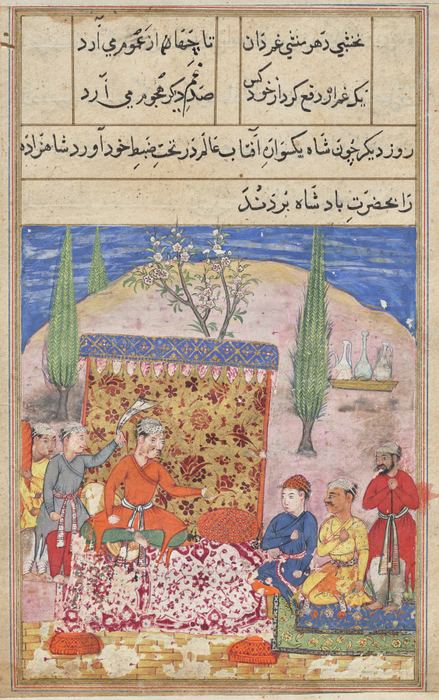 The young prince is presented to the king, his father, by his teacher, but refuses to speak, from a Tuti-nama (Tales of a Parrot): Eighth Night
Unknown artist, c. 1560
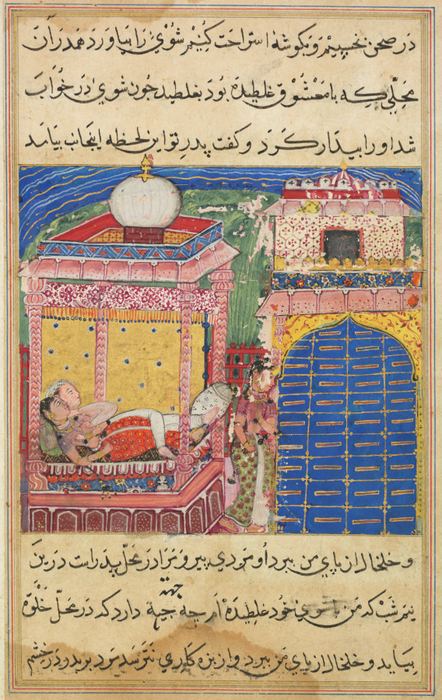 The deceitful wife persuades her husband to sleep in the same place where she had previously slept with her lover, from a Tuti-nama (Tales of a Parrot): Eighth Night
Unknown artist, c. 1560
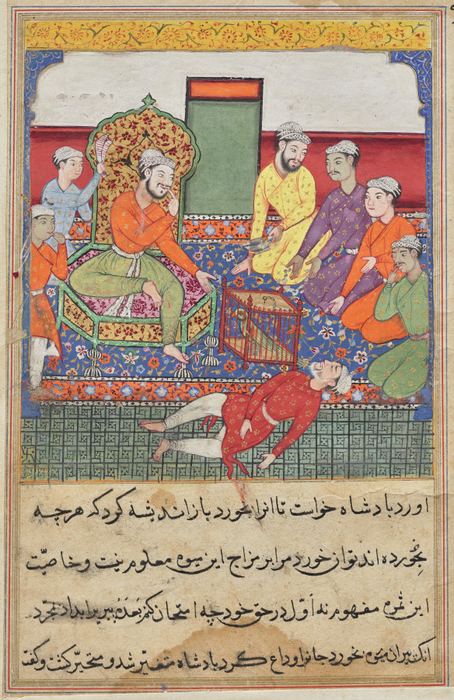 The old man eats of the fruit of the Tree of Life, but drops dead, from a Tuti-nama (Tales of a Parrot): Ninth Night
Lalu, c. 1560
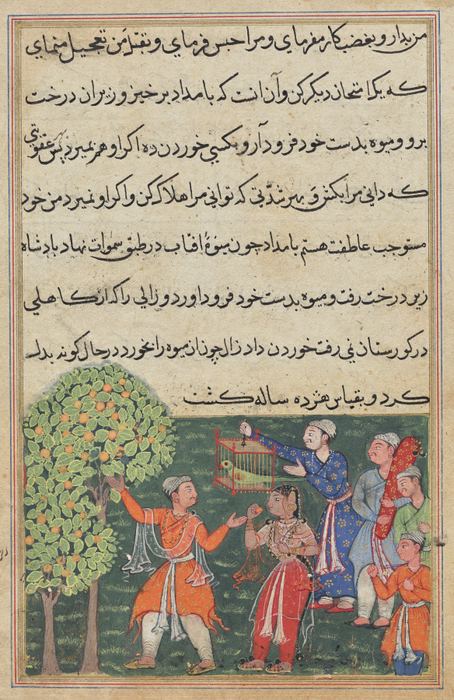 The king plucks fruit from the Tree of Life with his own hands and feeds it to a lady, from a Tuti-nama (Tales of a Parrot): Ninth Night
Suraju, c. 1560
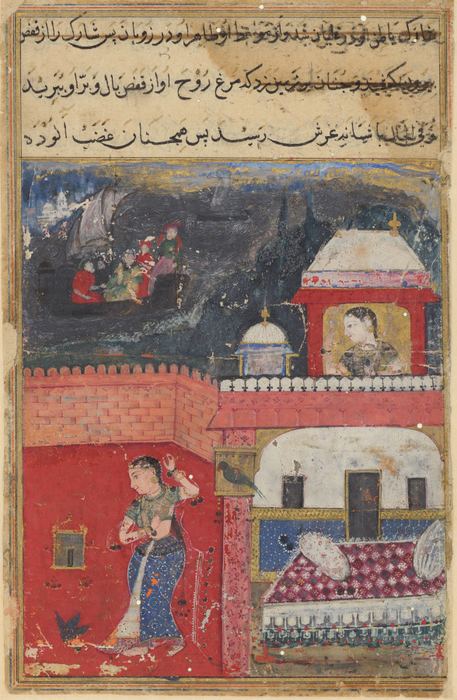 Khujasta kills the pet mynah who advises her not to be unfaithful to Maymun, her husband, from a Tuti-nama (Tales of the Parrot): First Night
Unknown artist, c. 1560
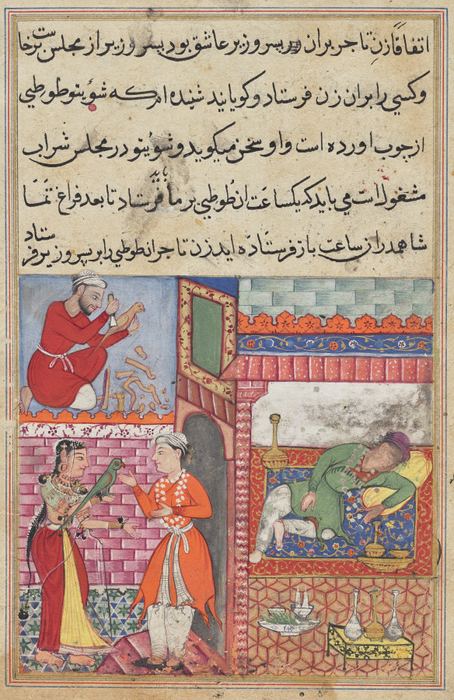 The vizier’s son receives the magic wooden parrot from the wife of the merchant, who is drunk, and has a replica made by a carpenter, from a Tuti-nama (Tales of a Parrot): Tenth Night
Lalu, c. 1560
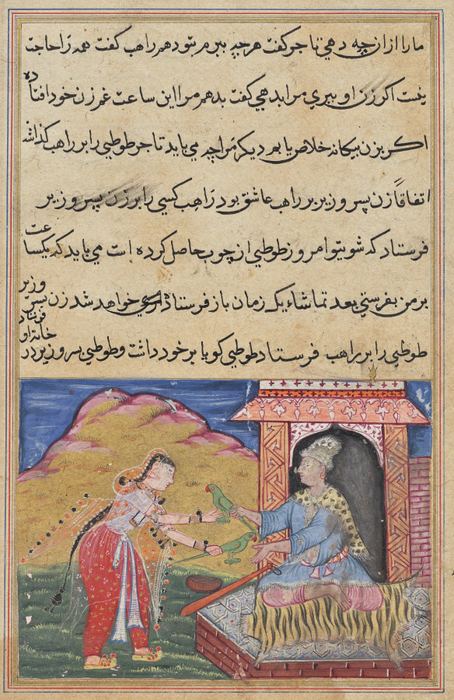 The wife of the son of the vizier brings the magic wooden parrot to her lover, the monk, who exchanges it for the replica, from a Tuti-nama (Tales of a Parrot): Tenth Night
Lalu, c. 1560
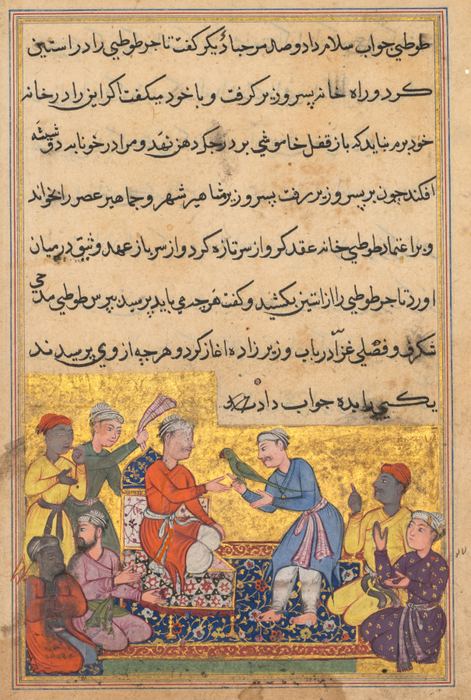 The magic parrot of the merchant talks to the vizier’s son, from a Tuti-nama (Tales of a Parrot): Tenth Night
Lalu, c. 1560
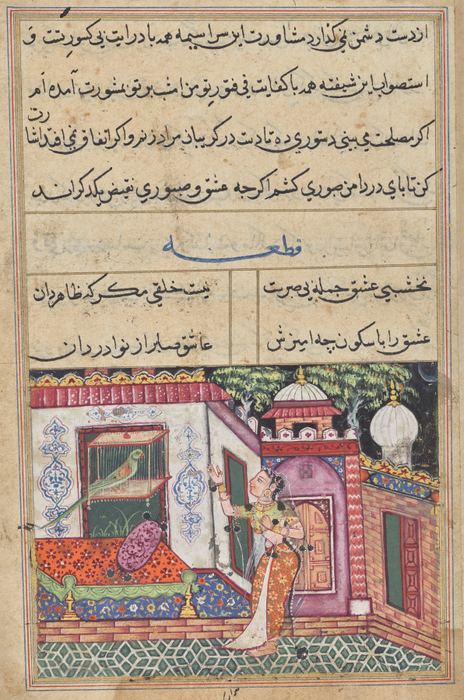 The Parrot Addresses Khujasta at the Beginning of the Eleventh Night, from a Tuti-nama (Tales of a Parrot)
Banavari 2, c. 1560
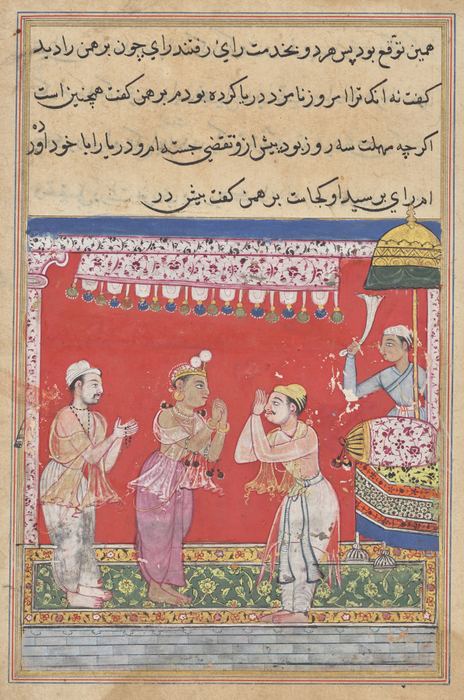 The king of the Ocean, having assumed human form, arrives at the court of the Raja, from a Tuti-nama (Tales of a Parrot): Eleventh Night
Ghulam 'Ali, c. 1560
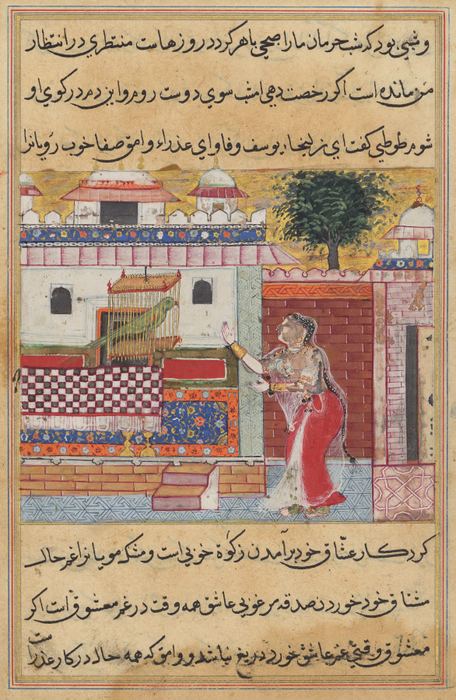 The Parrot Addresses Khujasta at the Beginning of the Twelfth Night, from a Tuti-nama (Tales of a Parrot)
Tara 1, c. 1560
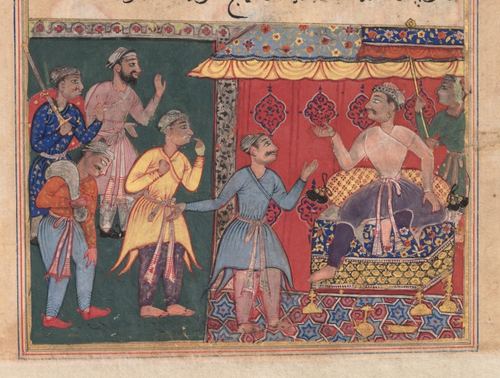 King Bhojaraja tries in vain to ascertain the whereabouts of the pearl from the four travelling companions, from a Tuti-nama (Tales of a Parrot): Twelfth Night
Unknown artist, c. 1560
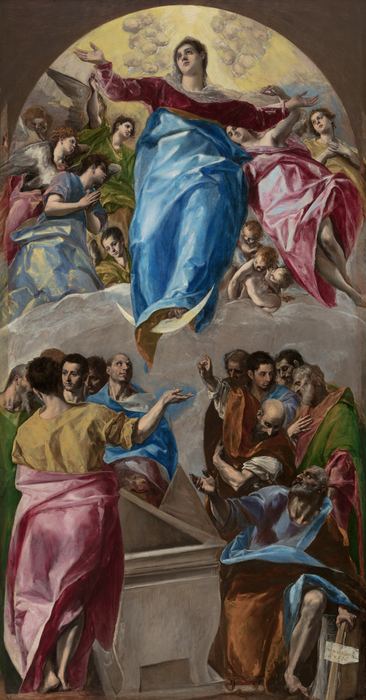 The Assumption of the Virgin
Domenico Theotokópoulos, called El Greco, 1577–79
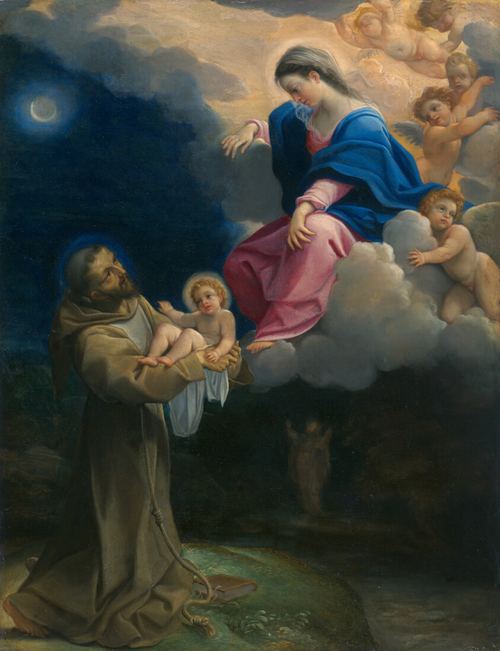 The Vision of Saint Francis
Ludovico Carracci, c. 1602
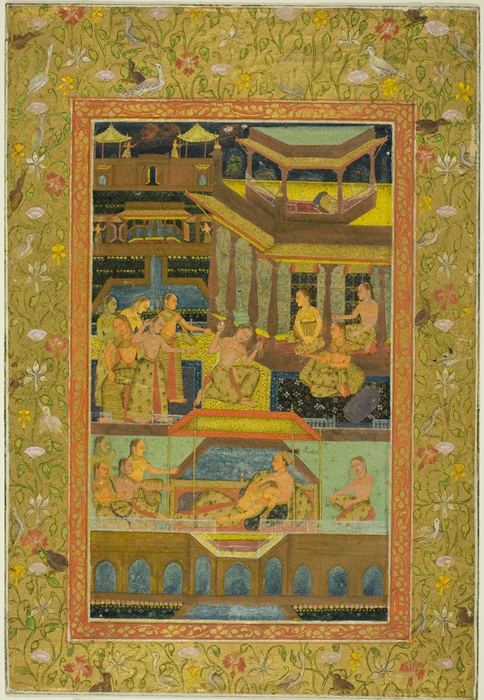 Lovers in a Zenana Garden at Night
Mughal, 17th/18th century
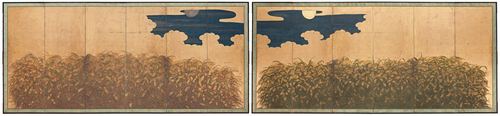 Millet Fields under Sun and Moon
Unknown artist, 17th century
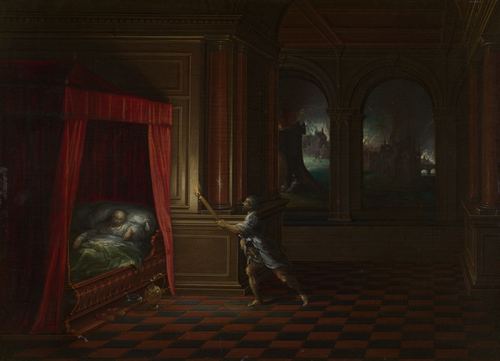 Aeneas Rescuing Anchises from Burning Troy
Hendrick van Steenwijck, the Younger, c. 1610
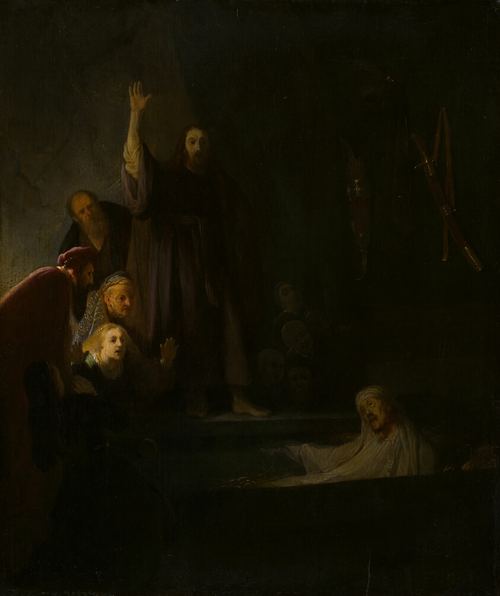 The Raising of Lazarus
Follower of Rembrandt van Rijn, c. 1630
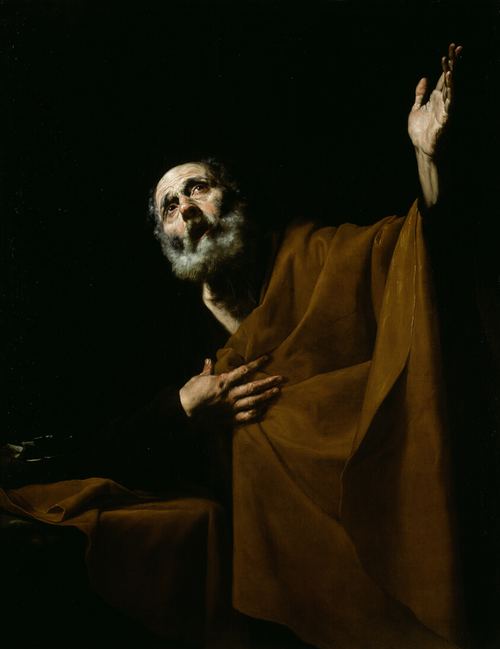 Penitent Saint Peter
Jusepe de Ribera, c. 1630
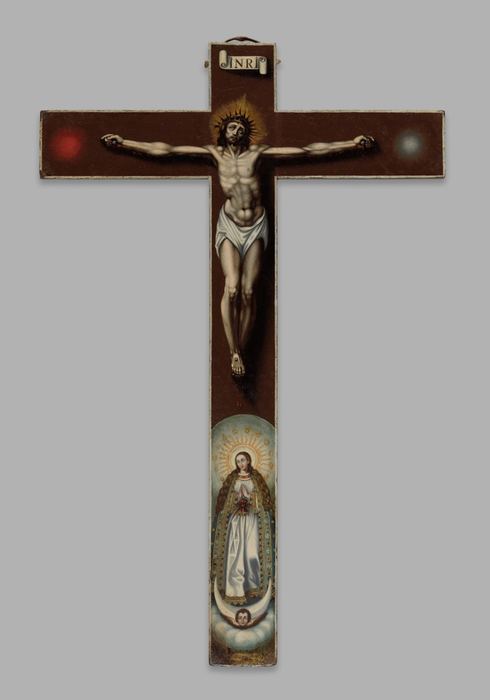 Crucifixion
María Josefa Sánchez, 1646
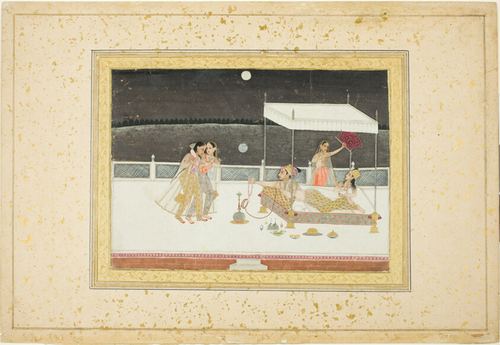 Seduction Scene on a Terrace by Moonlight
Mughal, 18th century
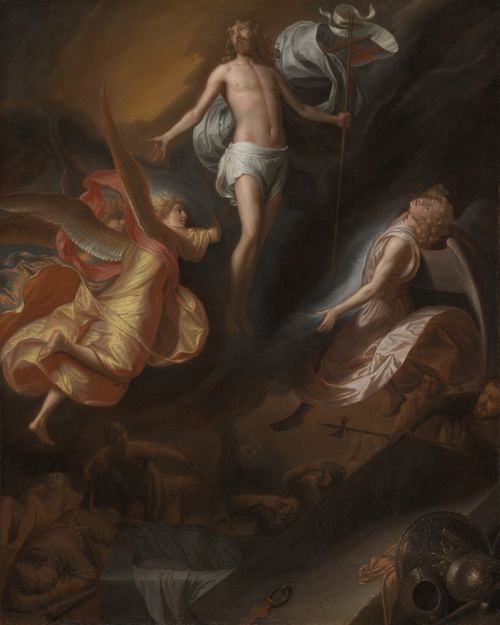 Resurrection of Christ
Samuel van Hoogstraten, c. 1665
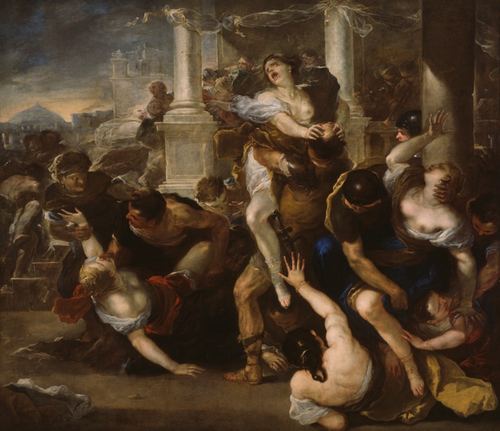 The Abduction of the Sabine Women
Luca Giordano, c. 1675
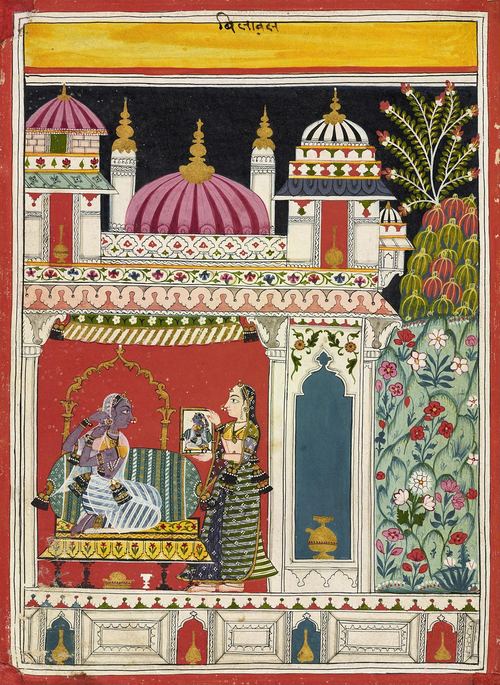 Vilaval Ragini
unknown, ca. 1680
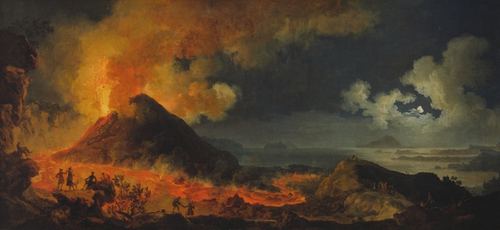 The Eruption of Vesuvius
Pierre-Jacques Volaire, 1771
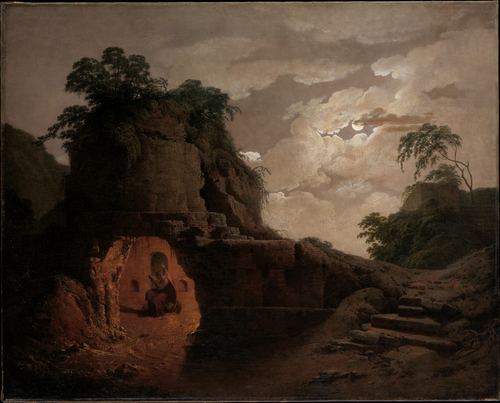 Virgil's Tomb by Moonlight, with Silius Italicus Declaiming
Joseph Wright of Derby, 1779
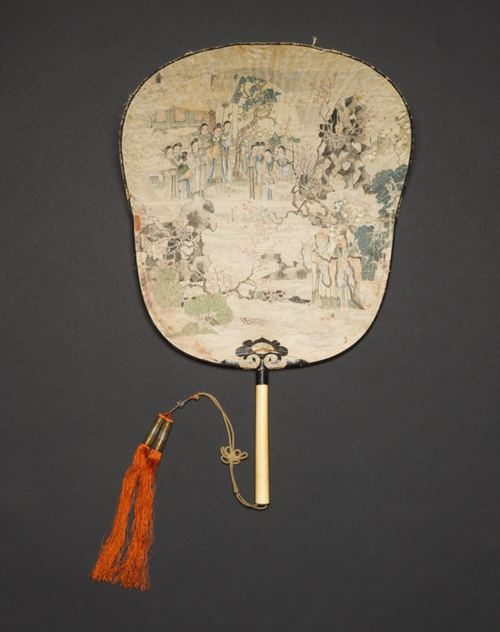 The Moon Palace
Unknown artist, Qing dynasty (1644–1911), 19th century
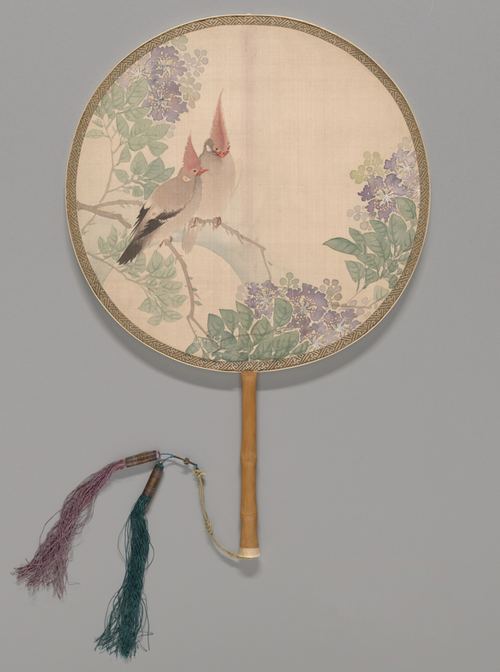 Red-Whiskered Bulbul and Azaleas in Moonlight 花鸟竹柄团扇
Unknown artist, Qing dynasty (1644–1912), late 19th century
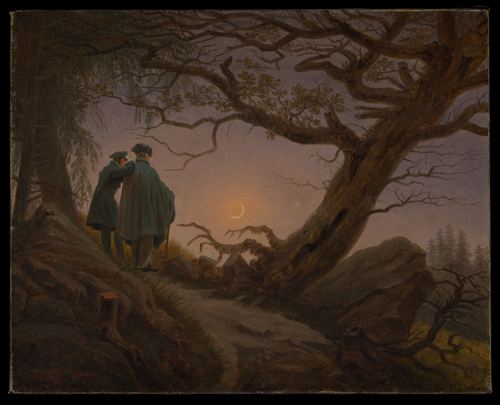 Two Men Contemplating the Moon
Caspar David Friedrich, ca. 1825–30
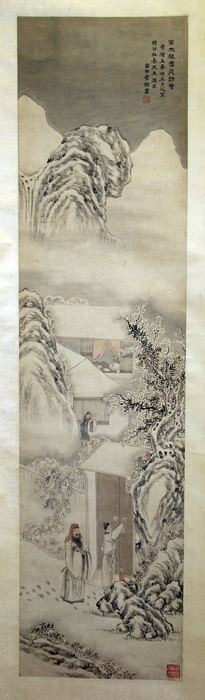 Emperor Song Taizu Visiting Scholar on Snowy Night
Unknown artist, late 19th century
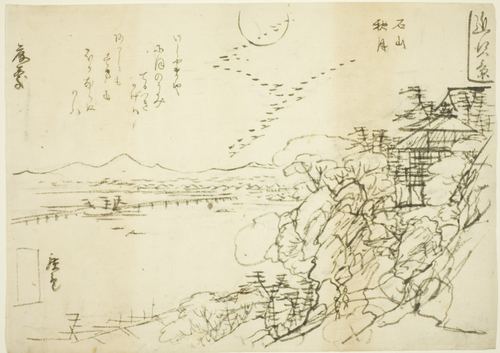 Sketch for Autumn Moon at Ishiyama Temple (Ishiyama no shugetsu), from the series "Eight Views in Omi Province (Omi hakkei)"
Utagawa Hiroshige II (Shigenobu), c. 1859
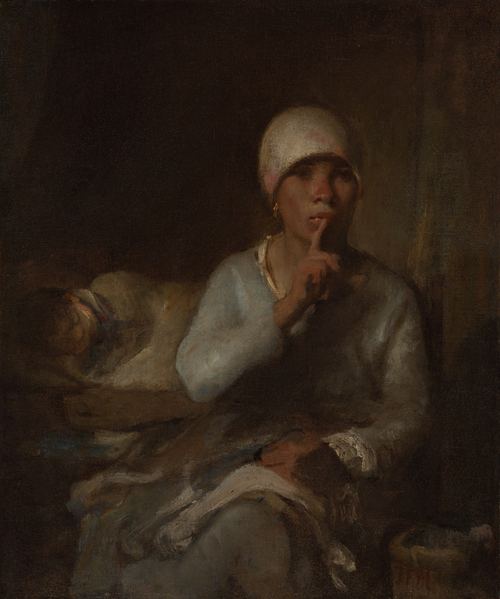 Woman and Child (Silence)
Auguste Boulard, the Elder, 1855/60
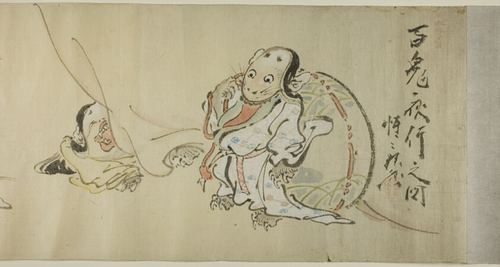 Night Procession of Goblins (Hyakki yagyo no zu)
Kawanabe Kyôsai, c.1865
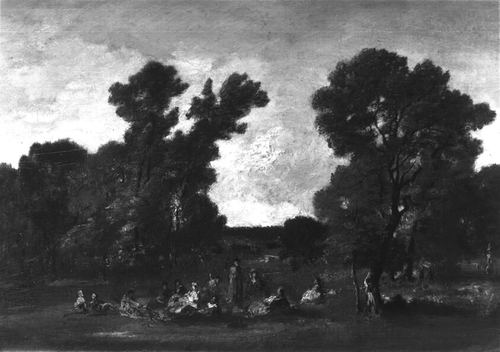 Landscape with Figures
Narcisse Virgilio Díaz, c. 1870
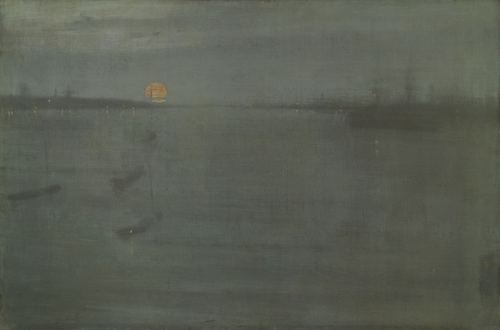 Nocturne: Blue and Gold—Southampton Water
James McNeill Whistler, 1872
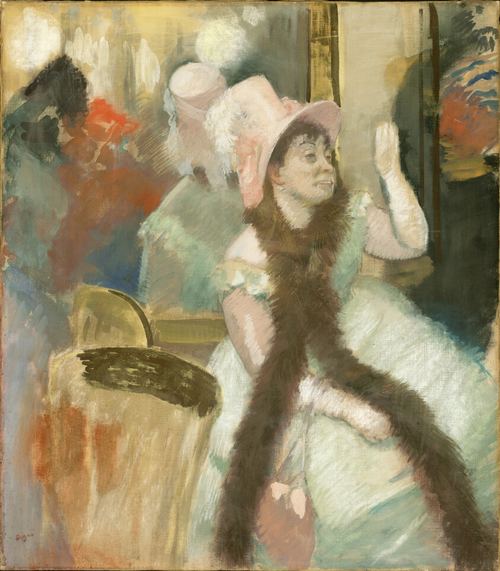 Portrait after a Costume Ball (Portrait of Madame Dietz-Monnin)
Hilaire Germain Edgar Degas, 1879
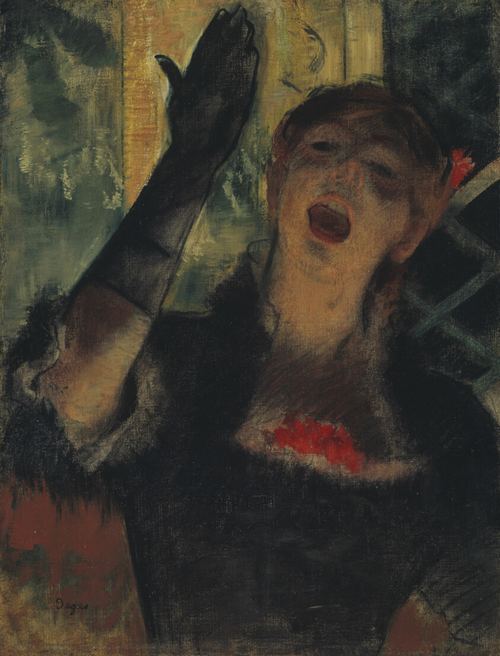 Café Singer
Hilaire Germain Edgar Degas, 1879
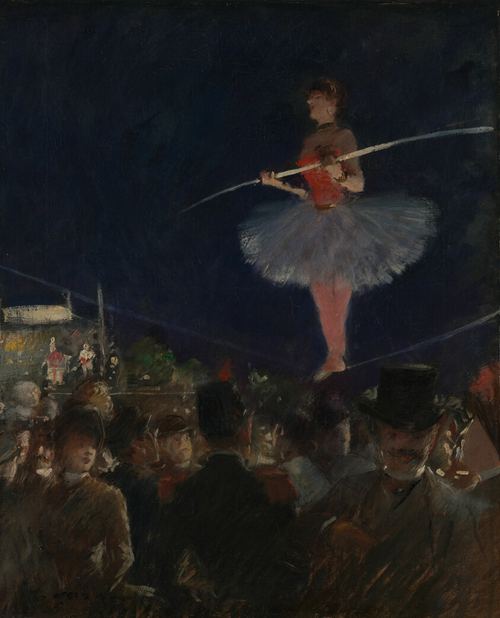 Tight-Rope Walker
Jean-Louis Forain, c. 1885
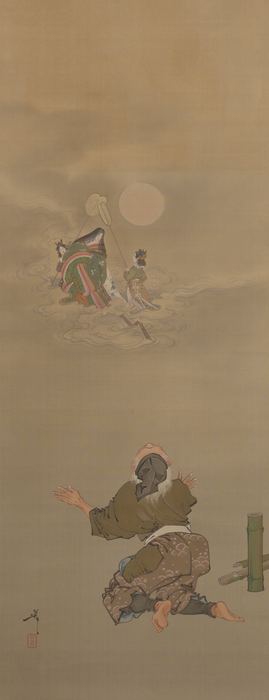 Received Back into the Moon Palace-Taketori (Bamboo Cutter) from the series Twelve Aspects of the Moon
Yoshitoshi, c. 1885/92
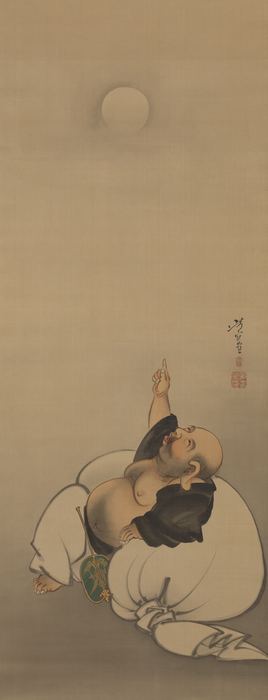 Moon of Enlightenment, from the series Twelve Aspects of the Moon
Yoshitoshi, About 1885-92
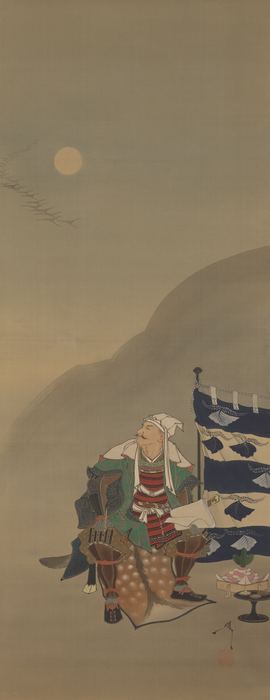 Frost fills the air and the autumn air is still/lines of returning geese cross the moon in the third hour-Kenshin, from the series Twelve Aspects of the Moon
Yoshitoshi, 1885/92
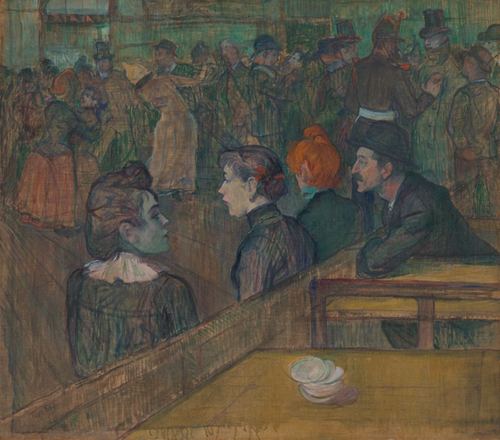 Moulin de la Galette
Henri de Toulouse-Lautrec, 1889
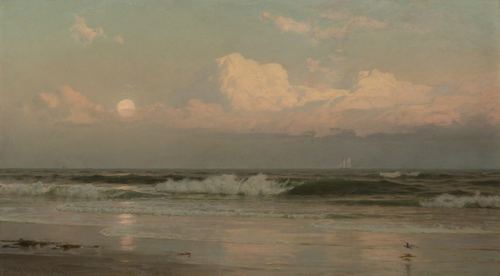 The August Moon
William Trost Richards, 1889
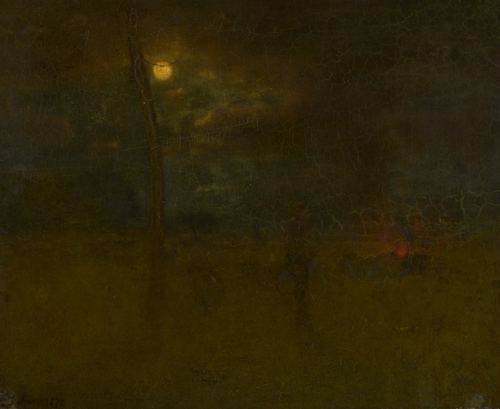 The Moon at Night
George Inness, 1890
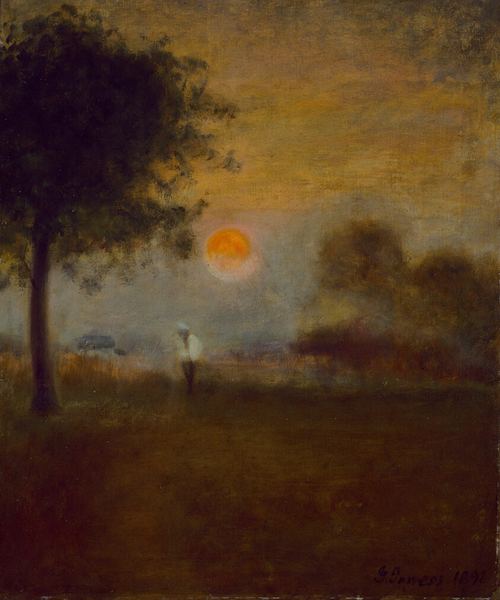 Moonrise
George Inness, 1891
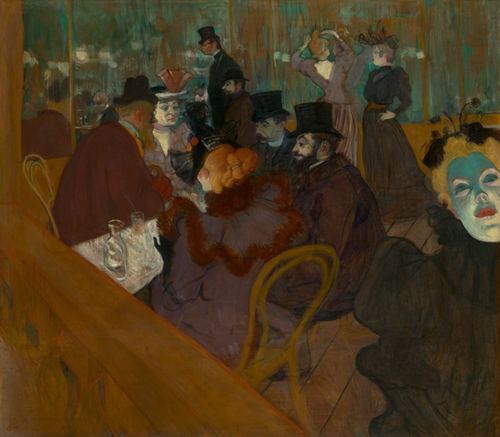 At the Moulin Rouge
Henri de Toulouse-Lautrec, 1892–95
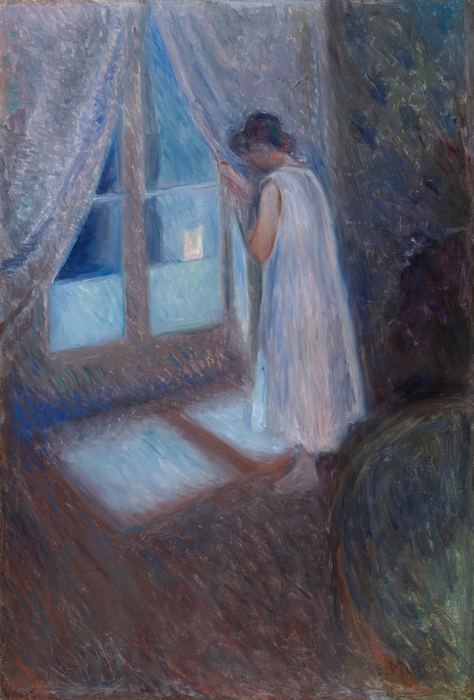 The Girl by the Window
Edvard Munch, 1893
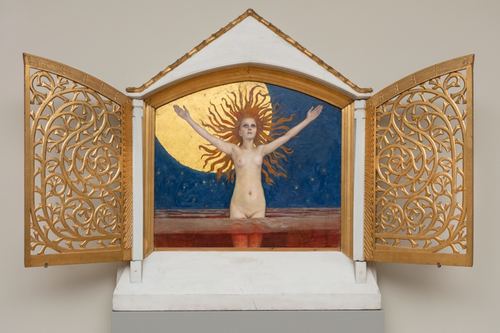 Ad Astra
Akseli Gallen-Kallela, 1894–96
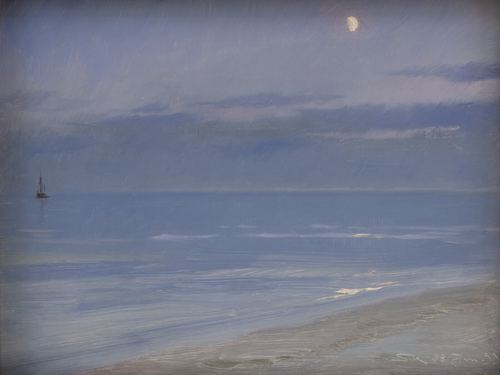 Moonlight on Skagen Beach
Peder Severin Krøyer, 1899
Showing 96 of 121.See all 121 in Explore